Showing posts with label B-17. Show all posts

Tuesday, June 18, 2019

B-17 Aluminum Overcast Lands at Cedar Rapids CID


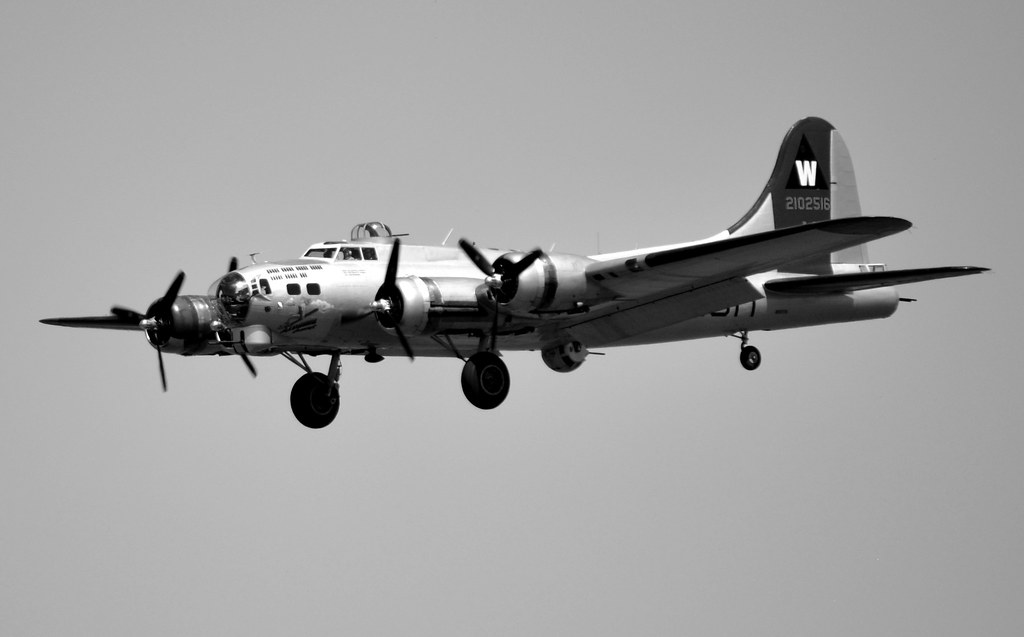
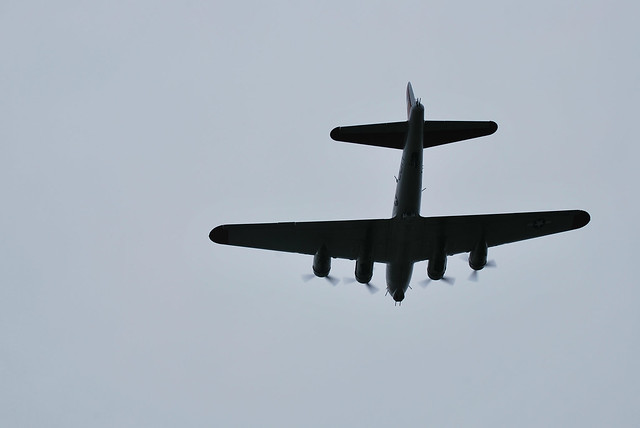
Another vintage WWII aircraft sighting this evening. This time it is the B-17 "Aluminum Overcast" at Cedar Rapids (CID). Yes, I saw the same flying fortress in Burlington, Iowa last year, and have seen it multiple times in Cedar Rapids. This week the plane's summer schedule had a last minute opening and fortunately was able to make another journey to the City of Five Seasons. In its one day appearance all flights were completely booked except for the last one of the afternoon. Storm clouds are on the horizon for tonight.


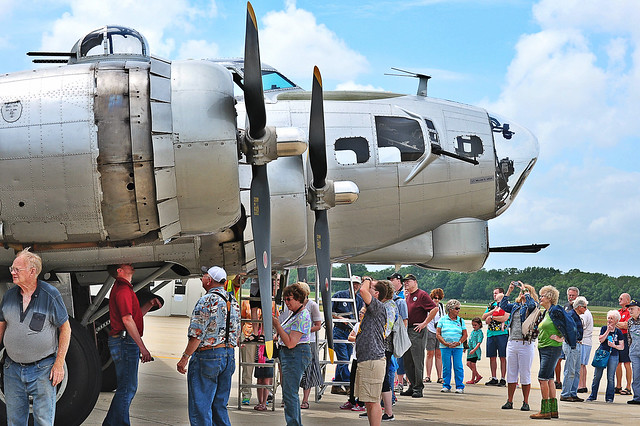
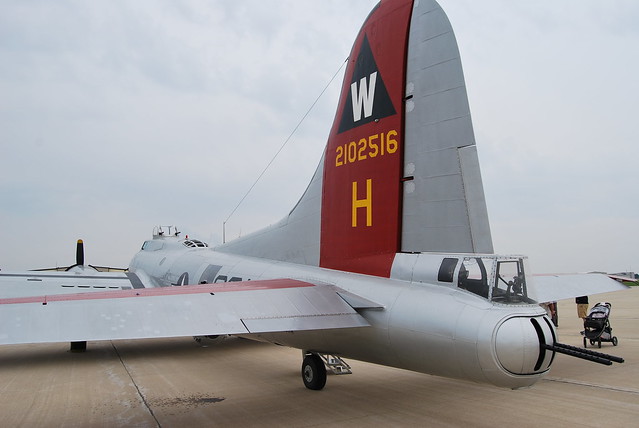
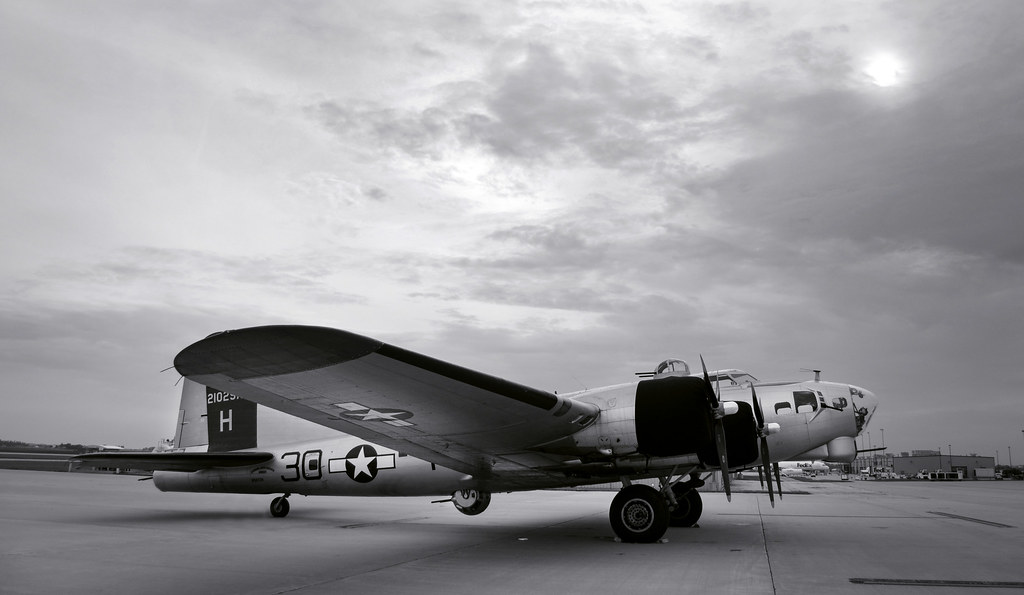
Aluminum Overcast sits on the tarmac in CID following a day of flights around the city for paying passengers (and media.) Unfortunately, I arrived an hour after the tour closed. I also do not have media credentials but probably should get accredited. I was an Associated Press stringer in college - maybe that will count. The covers on the engines are new this year according to a local EAA event host. The covers are designed to minimize the effects of rain, wind, debris and flying critters on the aging plane when parked for the evening.

Sunday, May 20, 2018

B-17 Aluminum Overcast Visits Burlington, Iowa


Almost annually a WWII warbird visits the Hawkeye state. This year, Aluminum Overcast, one of nine flying B-17s made a three day stop in Burlington situated along the Mississippi River on May 4th through 6th.


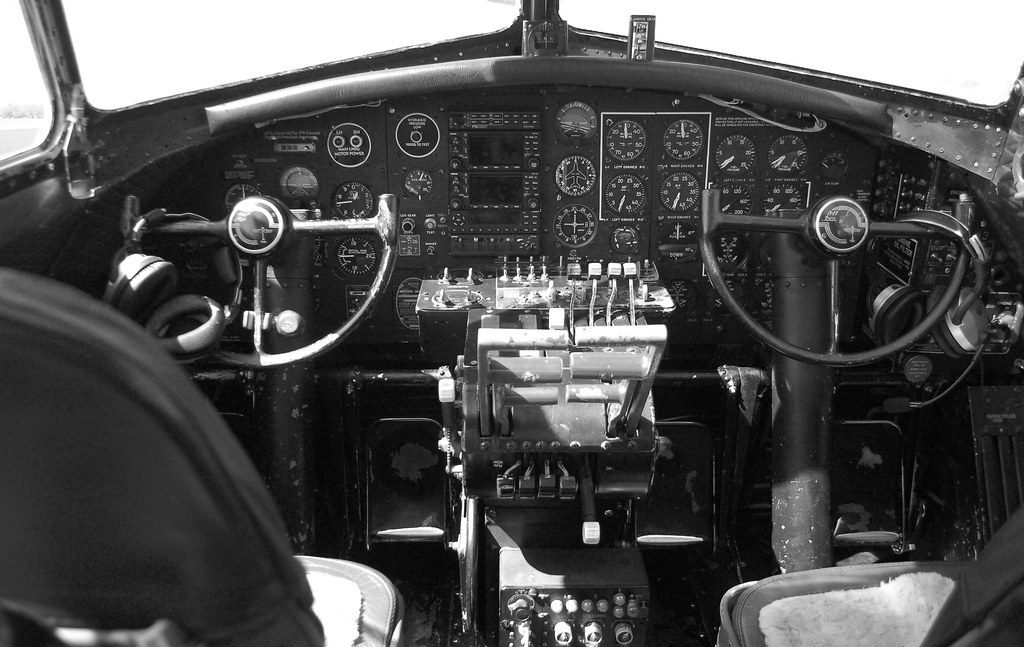
Crawling up ladder to the nose of the plane you enter a world from the 1940s. Here in the cockpit is a mix of wartime flight technology from 75 years ago blended with modern avionics for safer travel.


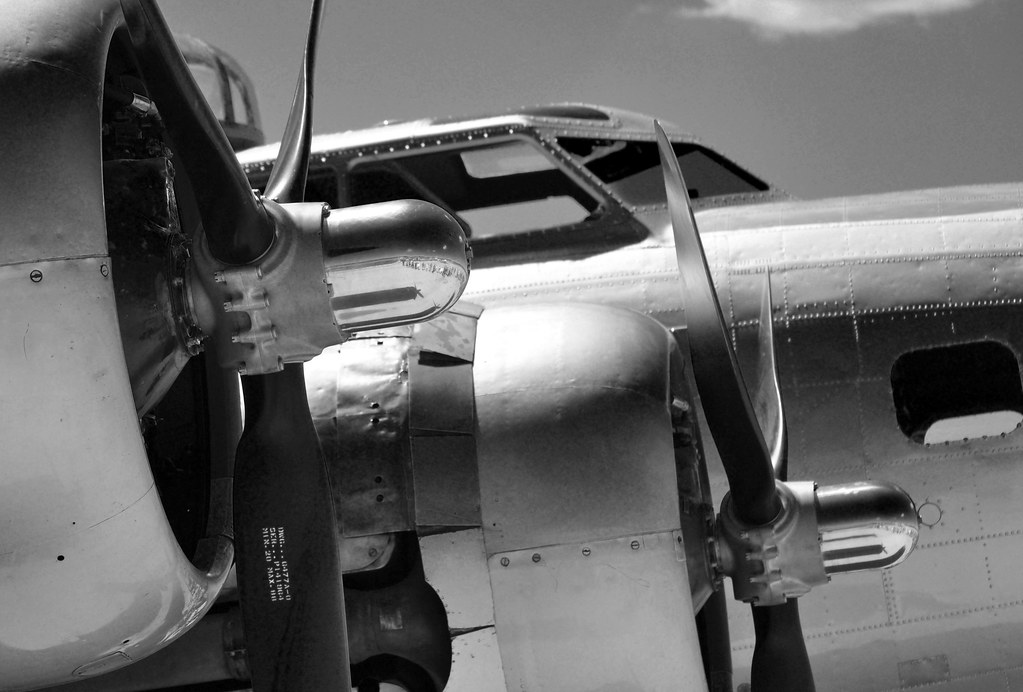
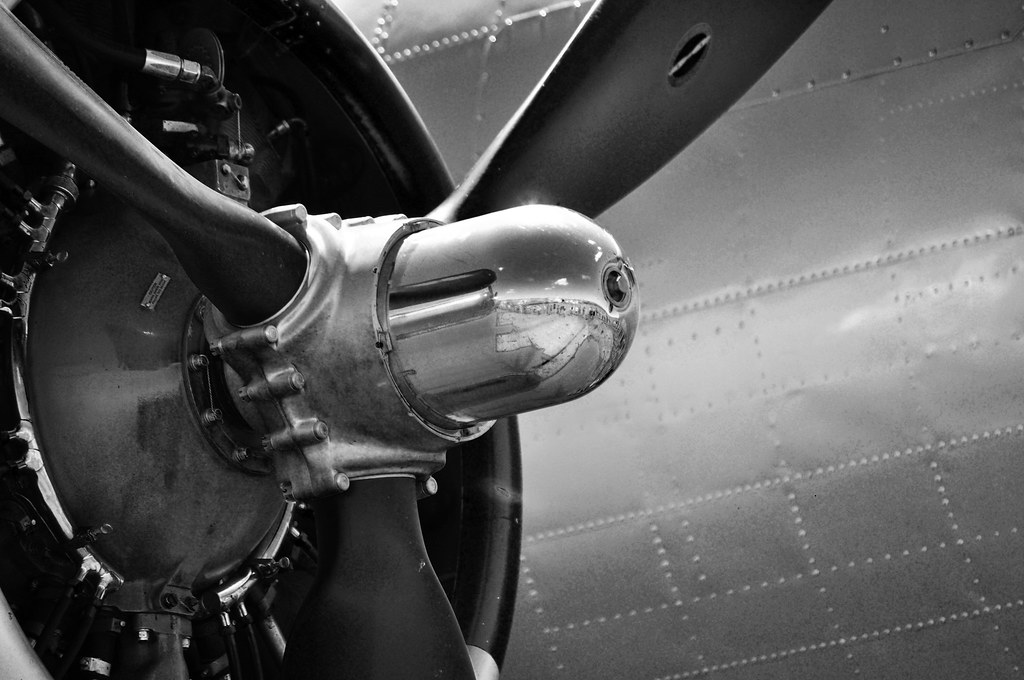
One of the secrets of B-17 longevity in battle was the strength of its fuselage. Notice the rivet pattern of small squares on the aluminum airframe. These assembly points made it possible for the frame to better remain intact during flak bursts or gun fire.


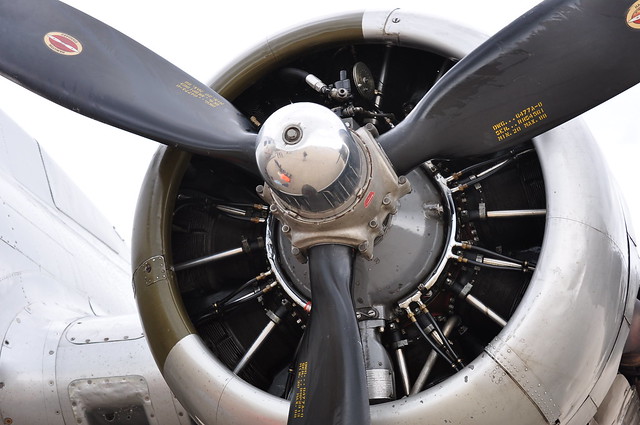
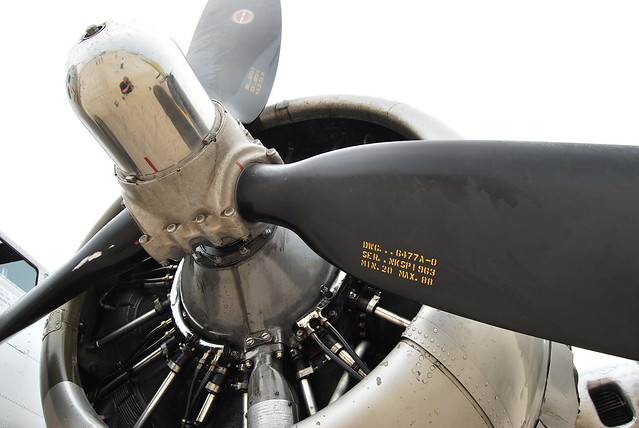
One of four props at rest. Aluminum Overcast, until next time...

Saturday, June 13, 2015

B-17 Aluminum Overcast Nose Art in Waterloo, Iowa


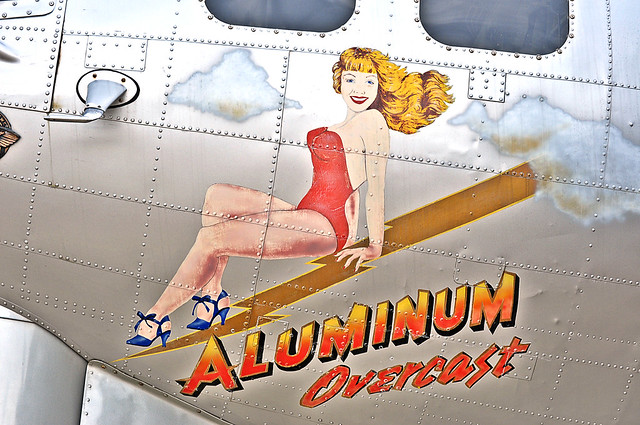
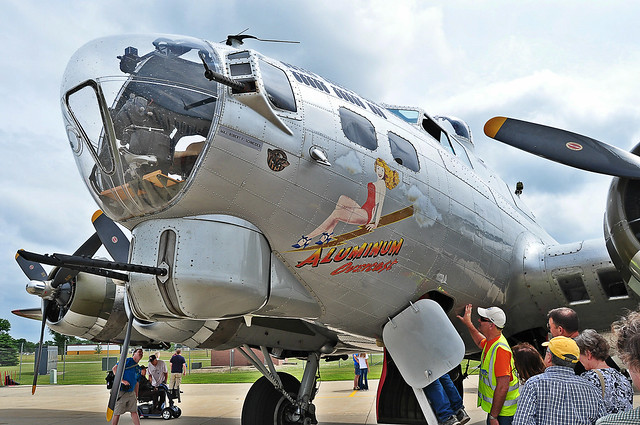
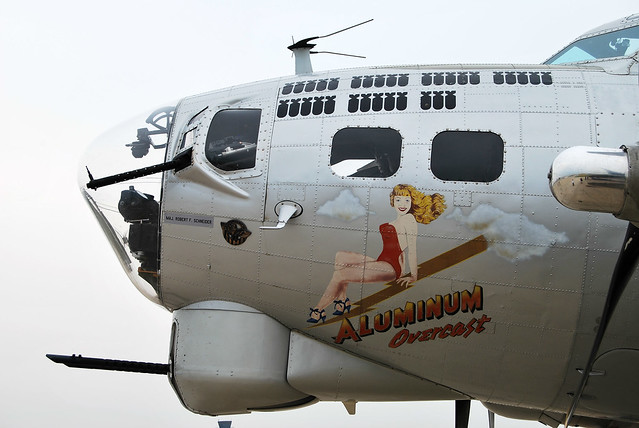
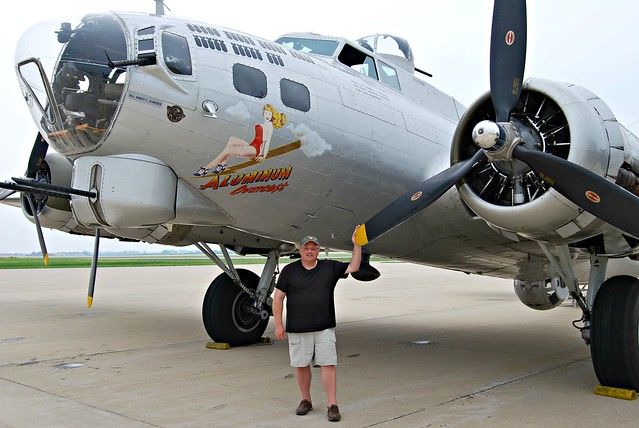
A close up view of the Aluminum Overcast left side nose art. This B-17G was built at the end of World War II.


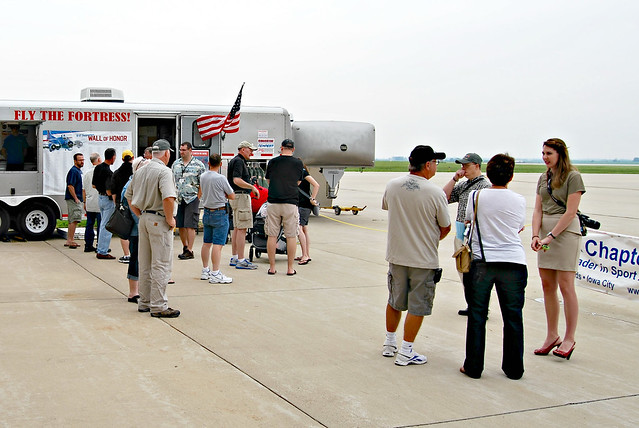
The Waterloo Airport was filled today with long lines of people who wanted to experience the B-17 bomber. A few WWII vets turned out too.

B-17 Aluminum Overcast at the Waterloo Airport


Waterloo Airport was the scene today for the B-17G Aluminum Overcast World War II bomber. The plane is at the airport through 5 pm Sunday, June 14.


A close-up of the WWII-era nose art.


These engines are inspected several time daily for wear and damage. Yup that's me in the reflection.


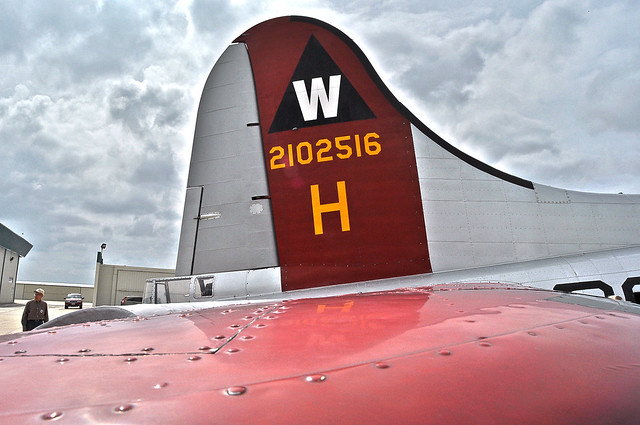
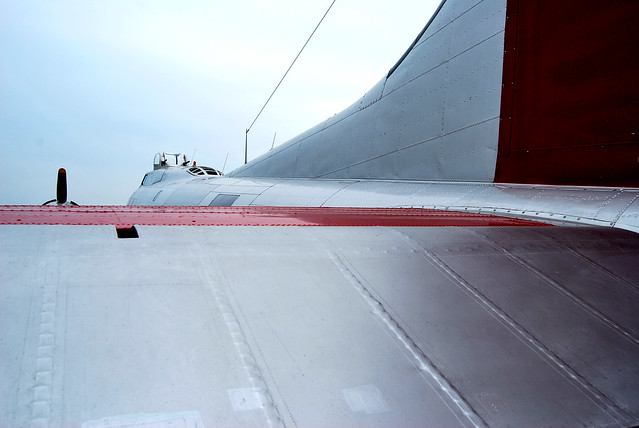
Tail rudder and aileron of the back end of the bomber. I did some high f/stop work here.

 
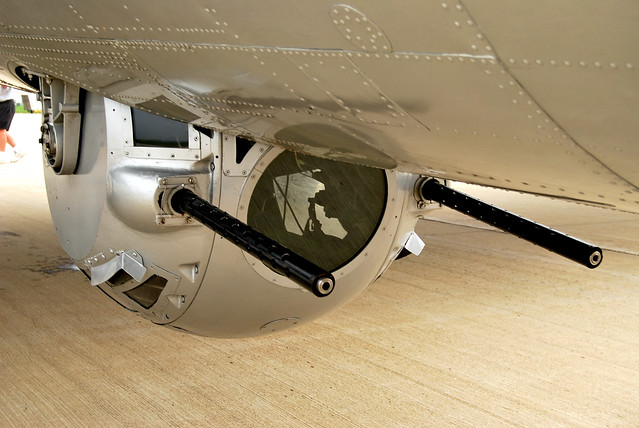
These guys marveled how a very thin gunner would get in the bottom turret. They remarked how this extremely small enclosure was for 17-18 year olds of the 1940s but not of this era. They speculated that people are much larger now.
 

The walking tour inside the aircraft started with a climb up to the cockpit and then a walk over the bomb bay to the machine gun area amidship. Finally the tour ended at the back of the plane.


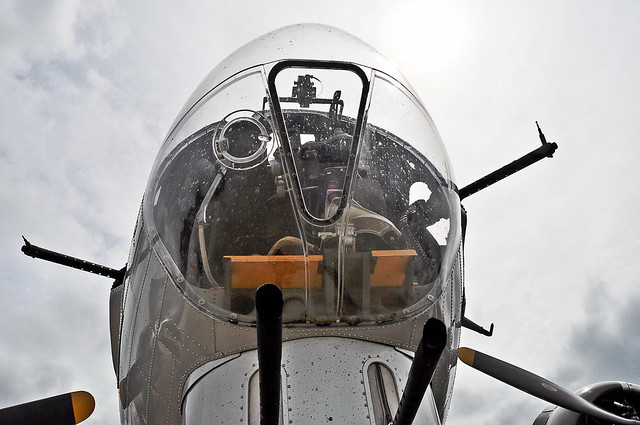
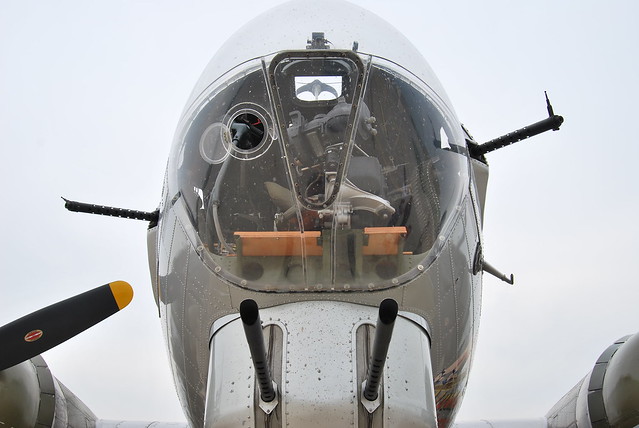
The plexi nose cone gave the bomber crew a clear view of any enemy fighters coming at them. The "G" model consisted of the addition of two forward pointing 50 caliber machine guns. Stop by to see this flying history aircraft. Read more tour stop details here.

Thursday, July 3, 2014

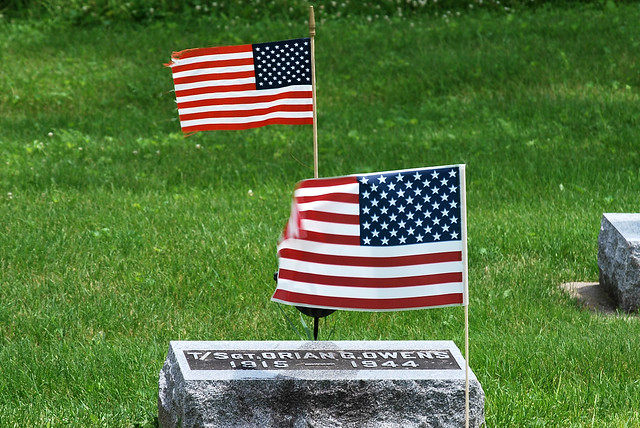
Price of Freedom - Orian G. Owens


During World War II Orian G. Owens' B-17F was shot down over Holland on a return bombing raid to Germany on January 11, 1944. He and other crewmates parachuted out and were recovered by resistance fighters. In April German SS found the crew, interrogated the Americans and shot them in what is now known as the massacre of St. Remy. After the war, Orian's body was returned to his family for burial in the Lisbon Cemetery. Read my article about him here.

Wednesday, June 11, 2014

Aluminum Overcast Visits Cedar Rapids During 2014 D-Day + 70 Years - Part 4


Last batch of photos of the Aluminum Overcast B-17 from last Saturday, beginning with the all important nose art.


Bottom turret gun. You had to be very small to fit in there.


Lots of aluminum on this warbird. And the overall color matches the sky conditions of the day too.


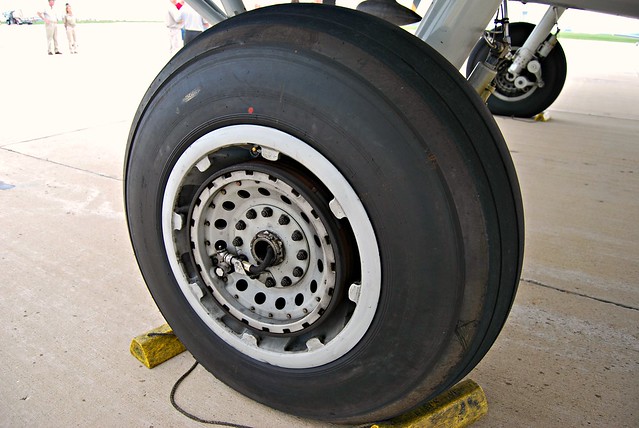
Cool newer tires on an old plane. While it may be old the Aluminum Overcast is well maintained. See it if you have a chance. 


The next stop for the Aluminum Overcast is Ankeny, Iowa. See the details of the 2014 tour here.


Sunday, June 8, 2014

Aluminum Overcast Visits Cedar Rapids During 2014 D-Day + 70 Years - Part 3


Me in front of the Aluminum Overcast yesterday at the Eastern Iowa airport in Cedar Rapids, Iowa. 

People gathered to see the warbird. A trailer housed the merchandising portion of the ground support group. 


Nose section of the B-17. That's the Norton bombsite in the front. Shhh, its still a secret.


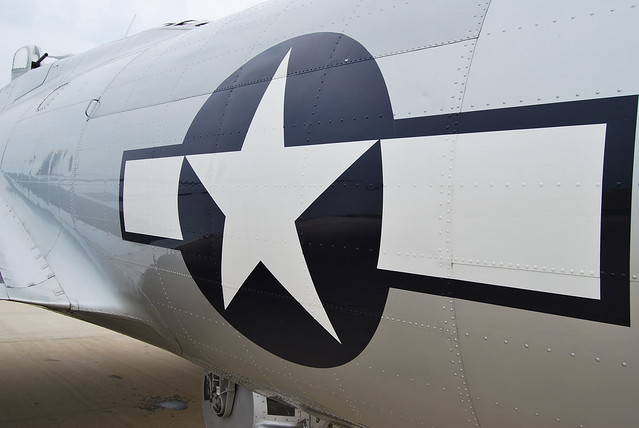
US markings on the left fuselage of the Aluminum Overcast B-17.


Aluminum Overcast Visits Cedar Rapids During 2014 D-Day + 70 Years - Part 2


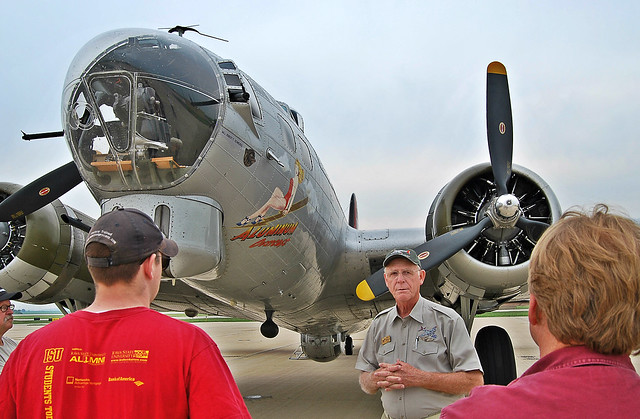
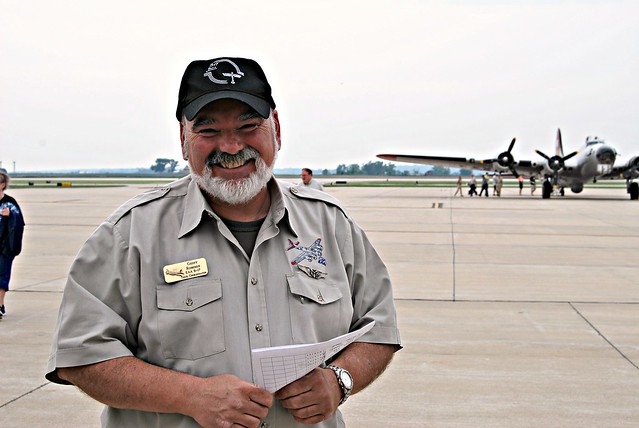
A friendly smile from a EAA volunteer who helps to organize the next list of passengers and allows others to view the B-17 aircraft close up.


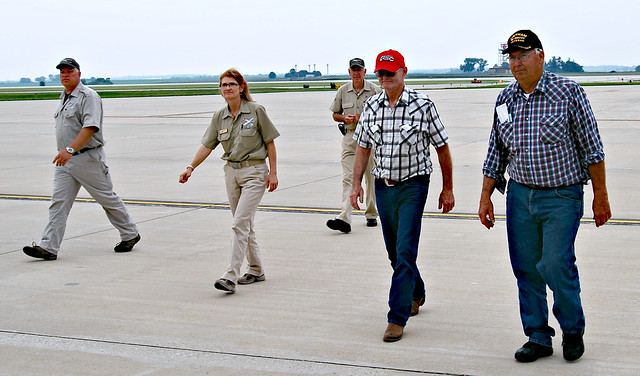
The Aluminum Overcast flight crew in uniform. The pilot is on the left and the copilot is the second from the left.


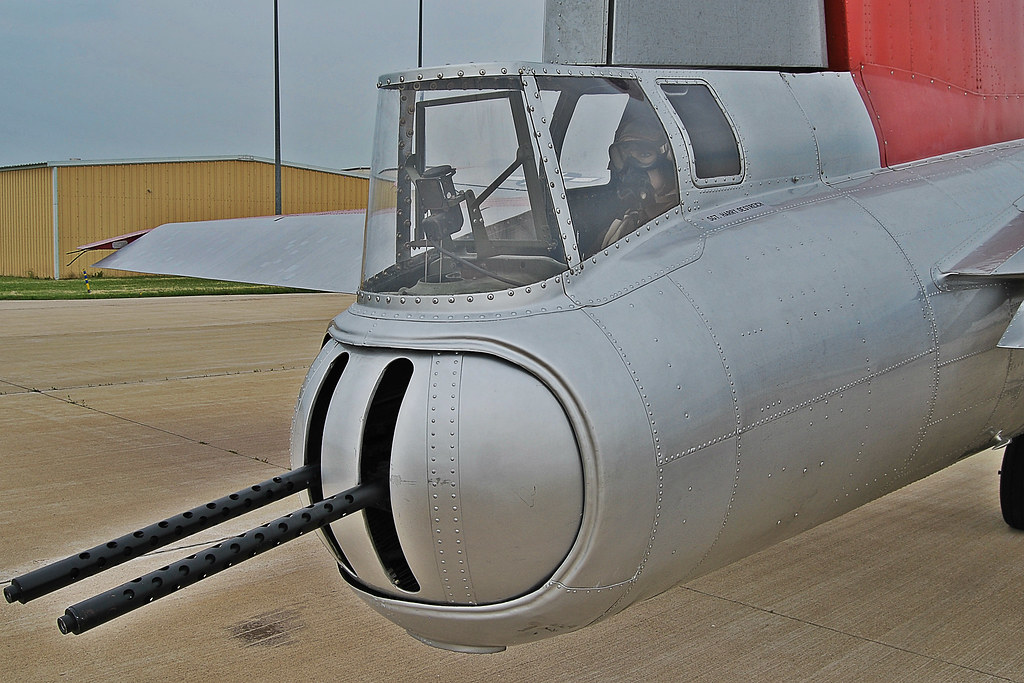
The business end of a B-17. We were told that all thirteen machine guns on board B-17s only had ammunition belts that stretched nine yards long - 27 feet! That was enough for a continuous one minute burst.That's "Lee" in the enclosure.


The aircraft maintenance guy told me that he only worries when these engines STOP dripping oil.


A different angle on an old warbird. Aluminum Overcast will be here in Cedar Rapids through today, June 8, 2014 before going to the next city on the tour.

Saturday, June 7, 2014

Aluminum Overcast Visits Cedar Rapids During D-Day + 70 Years - Part 1


One of perhaps 13 flying B-17s left in the world is Aluminum Overcast, a B-17G Flying Fortress from the WWII era.


Today, June 7th is D-Day +70 Years and one day, was also day two of the B-17 visit to Cedar Rapids, Iowa. Aluminum Overcast last visited our post on the prairie in 2010. There are many area vets, relatives and interested people who came for a look at a piece of aviation history.


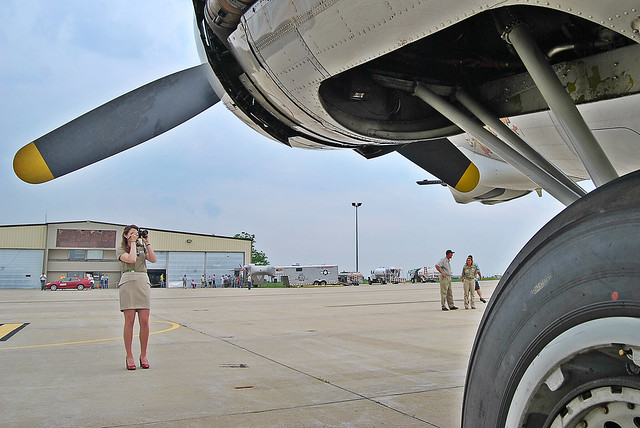
A local EAA volunteer takes photos of the plane for her collection. She also offered to photograph visitors using their camera and helped people get safely around the aircraft.The B-17's pilot and his copilot can be seen on the far right.


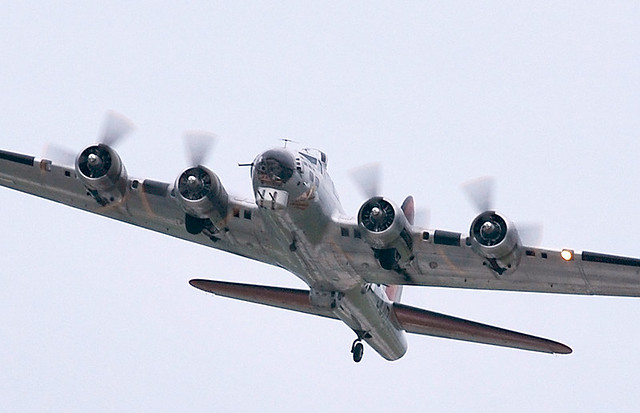
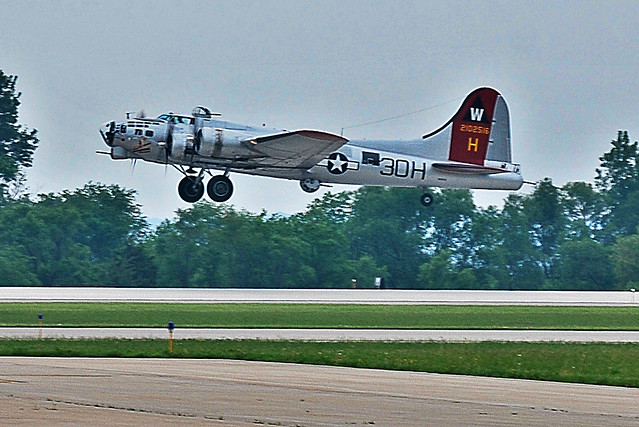
Filled with 10 paying passengers, Aluminum Overcast needs only a short distance to take off and land. The aircraft flies around the Cedar Rapids area for about 30 minutes. During this visit I have seen and heard it flying slowly around town at relatively low altitudes on four different occasions. Last year Fifi the only flying B-29 provided the same type of visit.


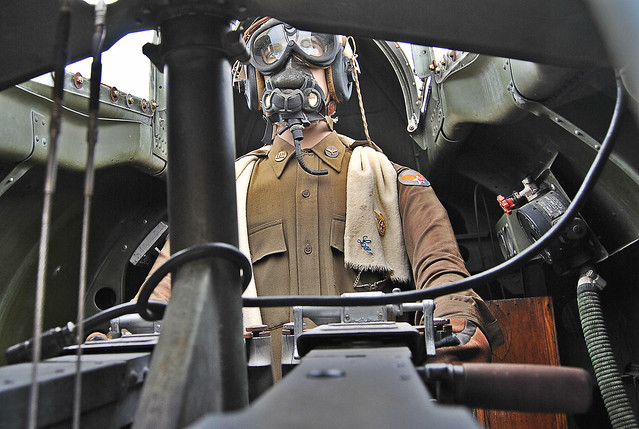
This is Aluminum Overcast's tail gunner. The dummy sports goggles, mask and a helmet from the WWII era. His scarf is stitched with the name of Lee. The historic aircraft will be here through tomorrow (Sunday, June 8th). Go to the former PS Air terminal on the west side of the airport by FEDEX operations. The ground walk around of the plane is free. Cost to go inside is $10 and $449 person to fly in WWII bomber comfort for 30 minutes. Call ahead of time, I believe one of the support crew told me only a few seats remain for Sunday series of flights.

Friday, November 11, 2011

Veterans Day 2011: Remembering Orian G. Owens

Tech Sergeant Orian G. Owens, WWII
Today through the power of the Internet and firsthand research brings into focus the special story of a fallen veteran from the 42N area.

Three weeks ago a stack of papers bought at auction in Coggon, Iowa yielded among other things, a small booklet called the Lisbon High School Alumni Directory 1880 – 1952. In the booklet are very brief updates of the then living or deceased high school classmates. I flipped through the pages, and stopped on one entry for the class of 1935. There among the time period of World War II was a six sentence description of a graduate who served in the Army Air Corps, was shot down, hid by the Belgium Underground and later shot by the Germans.

I was intrigued with this particular listing and went into research mode to find more information about Tech Sergeant Orian G. Owens and what happened to him. Here is his story for Veterans Day:

Following his Lisbon High School graduation in 1935 Orian George Owens (born Jan. 22, 1915), a farm boy, moved to the West Liberty, Iowa area in Muscatine County. Orian’s brother Harold graduated from Lisbon a few years later.

In 1942 Orian became one of 61 Muscatine county men who passed their physical examinations at the Camp Dodge (near Des Moines) induction center. On Aug. 27th Orian left Muscatine for the U. S. Army at Fort Leavenworth, Kansas, where he was assigned various duties.

Due to his farm machinery background Orian was assigned to the Army Air Corps and trained at the Shephard Field, California, Panama City, Florida and Salt Lake City, Utah. He became assigned to the 469th Air Force Bomber Squadron at Dallas, Texas where he became a First Engineer and top turret gunner on a B-17F Bomber. During a training exercise the landing gear jammed and Orian had to squeeze himself through the wing to manually lower the gear.

After training, Orian was sent to England and based at Thurleigh. His B-17F (tail number 42-30782) Bomber was nicknamed, "Rationed Passion." On January 11, 1944 the plane was part of 663 heavy bombers of the 306th Bomb Group. The target for Orian's tenth mission was a manufacturing plant in Halberstadt, Germany.

On the return trip, the plane was hit by flak and crashed in Holland. At that time the Germans occupied Holland, Belgium and France. Orian was injured when his parachute opened and then broke a rib upon hitting the frozen ground.

Orian and other crew members were picked up by the Dutch Resistance. Orian was hidden in a potato cellar with two other crew members. He was later escorted to various homes, barns and other shelters along with the other crew members. Still later the Dutch and Belgium Underground picked up the "Rationed Passion" crew and other downed airmen and moved them to the woods near Chimay and Saint Remy, Belgium, close to the French border.

On January 28th the Muscatine newspaper reported that Orian’s father had received notice that Orian was declared missing in action. At this same time Orian’s brother Harold was a POW under Italian control.

The group of ten U.S. airmen, including Orian waited for conditions to improve for them to be moved to France, then Spain and finally England. In the mean time the Germans closed the routes and the ten airmen had to wait for new escape routes to be established. Two men decided to escape on their own and later were successful.

Orian’s group of eight airmen had just concluded breakfast at 8 AM on April 22, 1944 when the sound of rifle fire came nearby. Nearly 1500 German SS soldiers flooded the area looking for the protected airmen and members of the underground. Orian’s group left the wooded area and was taken into German custody in Chimay. They were interrogated, stripped of their dog tags, false papers and money. After a three hour interrogation the men were loaded onto a truck with guards and headed back to the woods.

Once in the woods the airmen were escorted by two German soldiers each to a certain spot where they were lined up with their hands tied behind their backs. Then the group was separated with each airmen going in a different direction with two soldiers. A signal was given and the Germans shot the airmen in the back of their heads. The bodies were buried in a mass grave near Gosserlie’s airfield. Much later the grave was discovered and the bodies were transported to the military cemetery in Margraten, the Netherlands.

The eight airmen killed that day were from three different aircraft.

George Eike, B-17G “Susan Ruth”, Rochester, NY
Robert Benniger, B-17G “Susan Ruth”, Pittsburgh, PA
John Pindroch, B-17G “Susan Ruth”, Cleveland, OH
Vincent Reese, B-17G “Women’s Home Companion”, Philadelphia, PA
Orian Owens, B-17F “Rationed Passion”, Lisbon, IA
John Gramborsky, B-17F “Rationed Passion”, Chicago, IL
Charlie Nichola, B-17F “Rationed Passion”, Stockton, CA
Billy Huisch, Douglas, AZ

Five months later, the U.S. Army declared Orian as Killed in Action since no one had seen him since the capture. Again his father, George received word of the matter from the War Department. Orian’s brother, Harold, once held as POW was able to escape and rejoin his unit after a 500 mile journey.

After the war, Belgian military authorities tried the main culprits who carried out what is now known as the Massacre of St. Remy. In 1947 four men were sentenced to death while another two served jail time as a result of their complicity in the matter.

The crash of Orian’s B-17 ten member bomber resulted in five KIAs, three POWs and two airmen who evaded capture. In 1948 Orian’s body and other fallen veterans was recovered from Margarten cemetery for transport back to the United States. Flag draped caskets, coming from the war theaters were brought to America at intervals throughout 1948. Last honors were accorded to the serviceman at funeral and burial rites. Final interment was in the cemetery chosen by his next of kin.

Orian’s father George requested that his son be buried next to his mother at a cemetery in Lisbon, Iowa. A military funeral for T/Sgt. Owens was held on November 4th, 1948 at the Federated Church in Lisbon. Orian was awarded the Purple Heart, Air Medal and the Oak Leaf Cluster posthumously.

The town of Lisbon continues to honor its war dead. A new monument to the fallen veterans of Lisbon contains Orian’s name among the list of war dead. Periodically the Lisbon History Center conducts cemetery walks called, “Walk Through the Past” so that stories like Orian’s continue to be told. Know that.


Wednesday, July 28, 2010

Why Preflight Prep for B-17 Engines is all Hands Up


A preflight activity took place last week during a visit from the B-17, Sentimental Journey. Ground crew members slowly rotated the four propellers by hand - much to the amazement of the crowd (see above video from last week's visit.) Why are they doing that, asked small children.

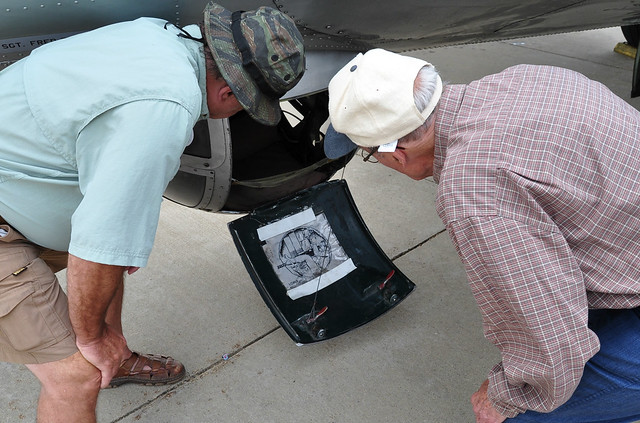
A person in the know told us that the propellers are turned over by hand to clear the pistons of oil and/or gas that may have leaked into the cylinder heads, which are typical of radial engines like those used on B-17s. Any liquid in the cylinders would damage the engine if started. Turning the engine over slowly by hand allows any liquid to be purged from the cylinders. Slowly rotating the engine before starting allows the collected oil to be recirculated.

Pulling the engine through several rotations by hand was standard procedure for many radial engine warplanes in World War II. Ground crews used to line up and each one in session would grab a prop blade and walk it forward in the direction of the blade movement. Know that.
Friday, July 23, 2010

Thirteen Airworthy B-17s - A Small Group


Airworthy B-17s are a scarce commodity. This week the Aluminum Overcast paid a two day visit to 42N country. The World War II warbird is one of only about 13 airworthy B-17s left in the world. Some 12,731 B-17s were constructed during the war era. Of that number, many airships were destroyed in combat or after the war as obsolete aircraft. Only a small number survived the reclamation process as newer bombers like the B-29, B-36 and later early jet-bombers were introduced into military inventory.

The B-17 is an American icon of the Second World War. Preservation individuals and groups have made it possible for the people of the 21st century to see, hear and touch these aged warriors. The presence of these bombers at various events across the country gives veterans a chance to experience something they and their families are forever connected to. It also gives the public a chance to see how large and powerful these crafts were in turning the tide of war in the European and Pacific theaters of war.

Here is a list of B-17 Name or Nose Art – Owners – Base Locations:


1. Aluminum Overcast - EAA - Oshkosh, Wisconsin
2. Chuckie – W.D. Hospers - Fort Worth, Texas
3. Fuddy Duddy – Gen. William Lyon – John Wayne/Orange City, California
4. Liberty Belle – Liberty Foundation- Douglas, Georgia
5. Memphis Belle (Replica) – MARC/ Dave Tallichet – Chino, California
6. Miss Angela – Palm Springs Air Museum, Palm Springs, California
7. Nine O’Nine – Collins Foundation – Stow, Massachusetts
8. Pink Lady – Forteresse Toujours Volante – Paris – Orly Airport, France
9. Sally B – B-17 Preservation Ltd. – Duxford, England
10. Sentimental Journey – CAF Arizona Wing – Mesa, Arizona
11. Texas Raiders – CAF – Houston, Texas
12. Thunderbird – Lone Star Flight Museum – Galveston, Texas
13. Yankee Lady – Yankee Airforce – Willoe Run/Bellville, Michigan
A. Boeing B – Museum of Flight – Seattle, Washington (stored)
B. Shady Lady – Evergreen Aviation Museum – McMinnville, Oregon (static)

Over time, 42N has seen the Aluminum Overcast, Chuckie, and Sentimental Journey aircrafts – representing 25-percent of the all flying B-17s. If you get a chance see or ride one of these four-engine bombers you will experience a portion of what it was like to fight imperialism and fascism from the air. Know that.
Thursday, July 22, 2010

Iowa Governor Chet Culver Meets 42N


Iowa Governor Chet Culver made a trip to 42N country on Wednesday to give a speech at the groundbreaking of a local solar cell training center. Before departing the Cedar Rapids airport for Hiawatha, the Governor took a few minutes to talk with the 42N editor and a small crowd who gathered to watch a vintage B-17 take off.

Timing is everything in politics. The governor arrived just a few minutes after the B-17 "Aluminum Overcast" left for a 30-minute ride for its paying customers - including a WWII vet who last flew on a Flying Fortress in 1945. Those who helped a dozen or so passengers on a dream flight waited around until the plane returned. It was a captive crowd for the Governor, this being an election year.

After a few minutes he and his entourage left for nearby Hiawatha. What he missed within 30 minutes of his departure was the return of the B-17 and more importantly, the return of the body of a USAF Captain who was recently killed in Afghanistan. David Wisniewski's body was returned to Iowa City for ceremonies before eventually being flown to Arlington National Cemetery for burial on August 23.

Had the top state executive's staff been more attuned on the events of the day, the Governor could have attended the receiving ceremony just one hanger away by delaying the groundbreaking ceremony an hour or so. The Governor did order US flags in Iowa be flown at half staff on Saturday to honor Captain Wisniewski.

Wednesday, July 21, 2010

World War II B-17 Aircraft "Aluminum Overcast" Makes Stop in Cedar Rapids, Iowa


A World War II vintage B-17G made the Cedar Rapids, Iowa airport its home for two days in 42N country. The "Aluminum Overcast" is a warbird that travels the country offering rides and tours. This B-17 and the "Sentimental Journey" make their way here every two years or so. Their presence in eastern Iowa is a chance to mingle with those who have connections to the plane and era.

One person present this morning was inspired by an earlier flight on the Aluminum Overcast. Wendell Maakestad spent over 300 hours constructing a radio-controlled scale replica of the plane. He and the rcwarbirds club will be flying scale model planes near Marion, Iowa on Saturday. This morning Wendell was being professionally photographed with his plane and the real B-17 behind him.
A family from Waterloo, Iowa chipped in and bought a ticket on the plane for their patriarch's 89th birthday. He told me that his last trip in a B-17 before today was in 1945. He remembered the aircraft making a lot of noise but said today's ride was quieter probably because the enemy wasn't shooting at the plane.

He was based in Italy during the later stages of the war serving on a B-17s maintenance crew. After each mission he and his ground crew would run to the landing strip to see if their planes had made it back - many times the planes didn't return he reported. The worst for him was seeing a returning B-17 crew with three dead onboard from being shot by German aircraft.

Other passengers today, though much younger, were extremely thrilled to fly on one of a dozen or so remaining airworthy Flying Fortresses. Some 12,000 B-17s were manufactured in the United States during WWII. At one time squadrons of these planes would fly on daylight bombing raids from England to Germany with RAF bombers flying similar missions at night. There are many stories like the one from today that need to be told and heard. Fortunately the man's family was documenting his entire experience today.