Showing posts with label Burlington Iowa. Show all posts

Sunday, May 20, 2018

B-17 Aluminum Overcast Visits Burlington, Iowa


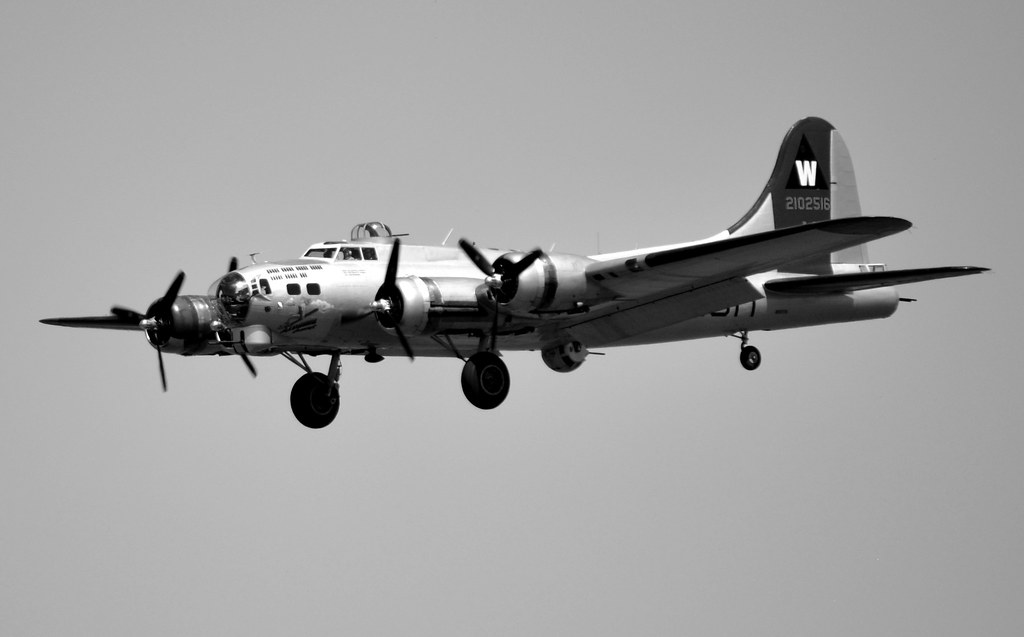
Almost annually a WWII warbird visits the Hawkeye state. This year, Aluminum Overcast, one of nine flying B-17s made a three day stop in Burlington situated along the Mississippi River on May 4th through 6th.


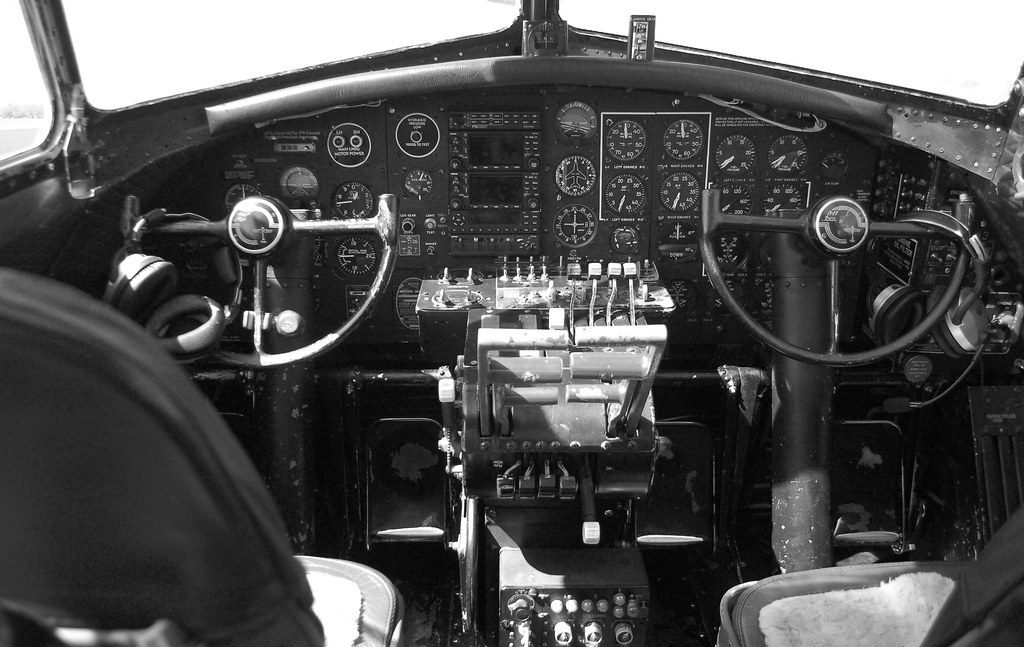
Crawling up ladder to the nose of the plane you enter a world from the 1940s. Here in the cockpit is a mix of wartime flight technology from 75 years ago blended with modern avionics for safer travel.


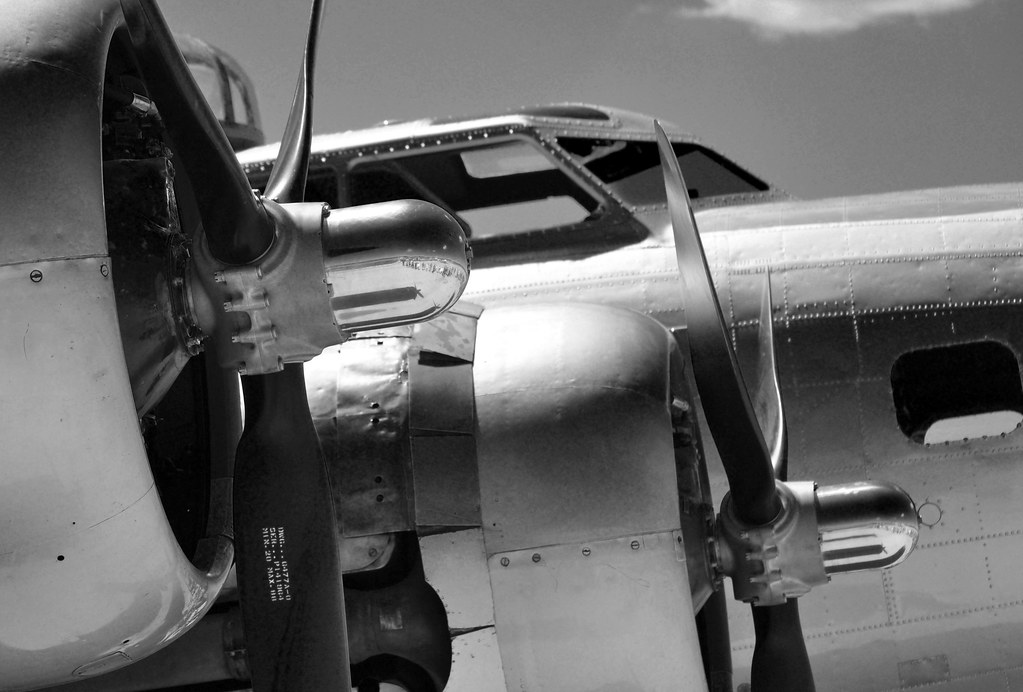
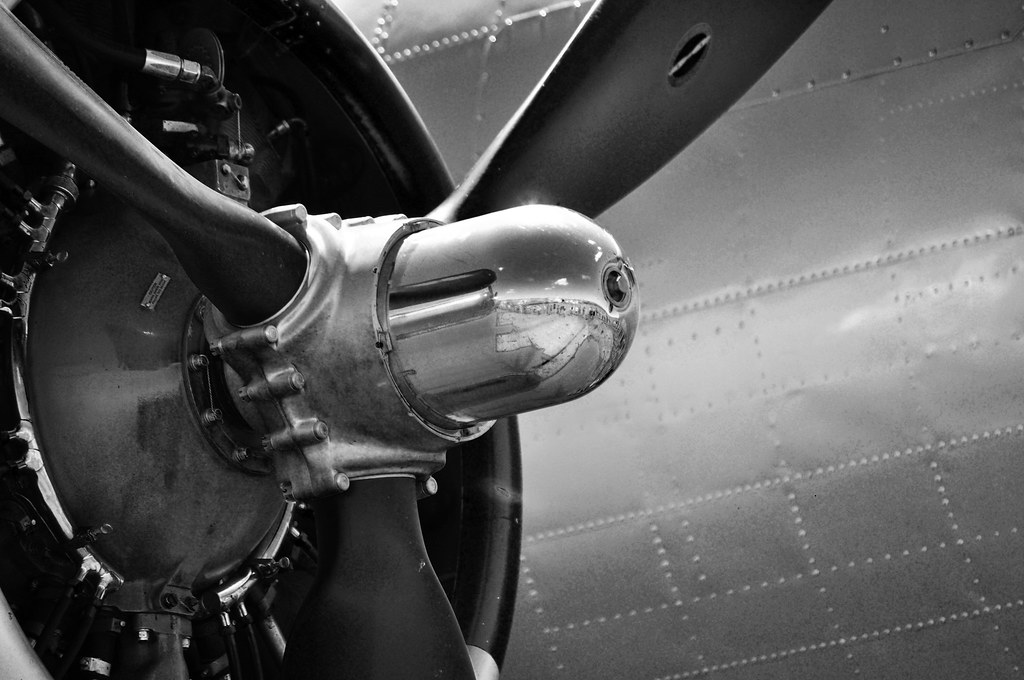
One of the secrets of B-17 longevity in battle was the strength of its fuselage. Notice the rivet pattern of small squares on the aluminum airframe. These assembly points made it possible for the frame to better remain intact during flak bursts or gun fire.


One of four props at rest. Aluminum Overcast, until next time...

Saturday, April 18, 2015

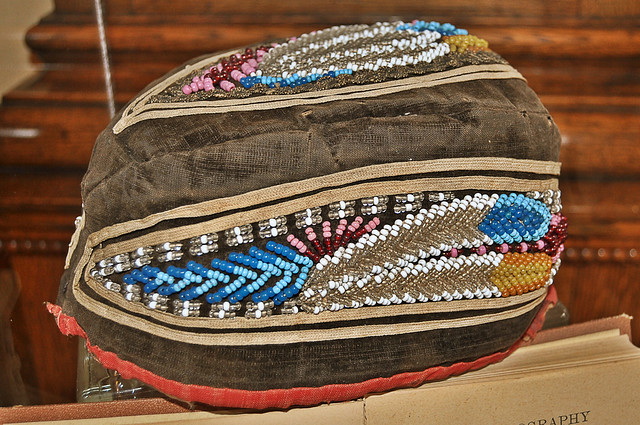
Chief Black Hawk's Hat in Exchange for Food


Sauk and Fox Chief Black Hawk continues to be studied here in the Midwest. Long after the 1832 Black Hawk War, his arrest near Prairie du Chien, Wisconsin and later death in 1838, he remains a strong influence on the region and in American lore. At the Des Moines County Historical Museum in Burlington, Iowa situated in the heart of Sauk and Fox country the chief's hat and autobiography were on display earlier. The revolving exhibit may have closed by now.


A nearby sign near the chief's hat reads that Mrs. Evan Evans received this beaded hat from Black Hawk in exchange for food. Mrs. Evans' great, great granddaughter donated the hat to the Burlington Free Public Library in 1965.

Following his death, Black Hawk's Iowaville grave was dug up and his bones removed. His remains were to have resided in an office in Burlington shortly after their removal. That office was destroyed by fire and presumably his bones were lost too. But there is growing speculation that Black Hawk's bones may have been stored in an office across the street and therefore survived the fire. The physical trail ends there at the moment but his legacy lives on.

Sunday, March 15, 2015

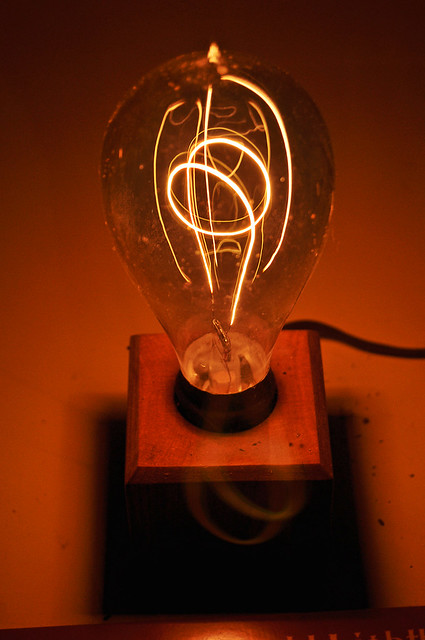
105 Years and Still Lighting the World


Some things last a long time. This light bulb still kicks out the rays despite being over a 105 years old. The bulb is located in the former Burlington, Iowa library which is now the Des Moines County Historical Society building. Electrical lighting was relatively new in 1898 when this building opened. A sign says this bulb was one of four found that were still in their sockets in the Grand Gallery balcony. Upon investigation these bulbs were determined to be made before 1910 because of their Thomson-Houston type bases and the tip of the glass drawn envelope. The glowing filament is also a flat tungsten ribbon instead of a coiled wire. According to bulbs.com the average life for incandescent bulbs is 750-2,000 hours. The Burlington based bulb has been burning on and off for 919,800 hours-so far. Shine on.

Thursday, November 22, 2012

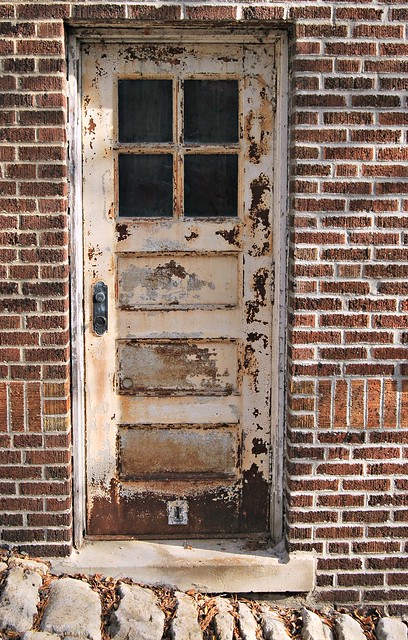
Lighting Up Burlington' s Masonic Temple Alley Door


Cobblestone Alley in Burlington, Iowa is perhaps as not as famous as its close neighbor Snake Ally located just a half block away. But a stroll down the real cobblestone pavement reveals a few home entrances and this interesting door.


Look a little closer at the door knob and discover a Masonic emblem, positioned a third turn to the right. Turns out this alley is the backside of the local Masonic temple. The building’s front faces east with its northeast corner, the traditional cornerstone location receiving the first rays of light each day. That orientation means this weather beaten door receives the last light of the day. And in between, according to the Masons the walls hold enlightenment.

Wednesday, October 17, 2012

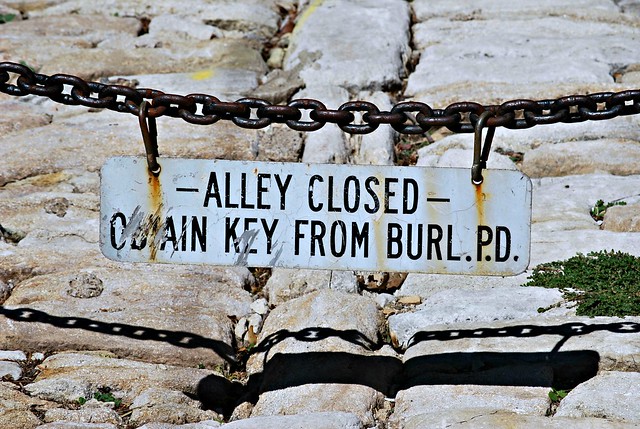
Burlington's Chained Time Portal


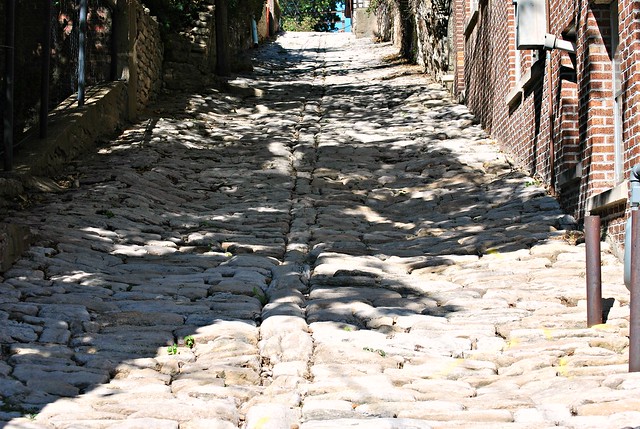
Next to Burlington Iowa's famous Snake Alley on the 600 block of Washington Street is a stone paved alley preserved from another time. This alley like its famous brick neighbor connects a residential street to a portion of the business district. A locked chain strung between two posts at the bottom of the alley limits access unless the key is obtained from the police. The alley is certainly accessible to pedestrians and cyclists who can maneuver around the chain. But cars and horse drawn carriages will encounter more difficult egress unless the chain is removed. When checking out Snake Alley be sure to venture eastward about 200 feet towards the river to discover this protected portal to Burlington's past.

Tuesday, September 25, 2012

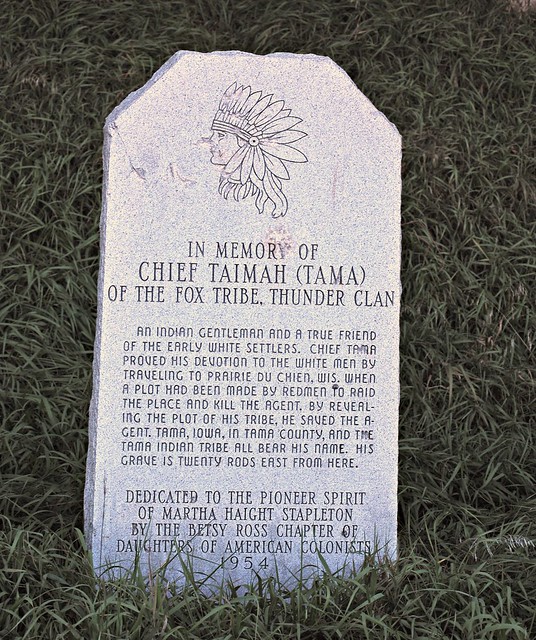
Chief Taimah (Tama) Memorial Along Iowa's Mississippi River


Living at one time in central Iowa I am very familiar with the town of Tama, the county of Tama and of course the Tama Indians. Today the natives are known as Meskwakis, having lived on a settlement near Tama for roughly 150 years following their purchase of the land. I had no idea that there was a Chief by the Tama name until last weekend! I previously thought Tama was a native name for the area like the word Iowa.

While in Burlington, Iowa near extreme southeast Iowa along the Mississippi River, I came for a Sunday outing to check out a rail road depot restaurant, the Old Man river, historic homes, rail roads and Snake Alley. Taking a different way out of town that afternoon brought us along the Great River Road on X99 headed north. Just a few miles out of town (maybe seven miles) is this Chief Taimah memorial on the west side of the road. A light colored granite marker has been in place for 58 years and acknowledges the Chief's work. 


The marker indicates that Chief Taimah is buried 20 rods east of the marker. I found where a rod length is 16-1/2 feet. So that makes his grave some 330 feet east of the roadside marker. That places it somewhere in this cornfield. I was standing in the middle of the road which was about 30 feet from the marker looking east. That means the Chief may be buried in the darker brown region of the cornfield near mid-photo. A passerby told me when he was a kid the cornfield never came this close to the road. I suppose the high price of corn and perhaps the loss of knowledge of where the Chief is buried somehow lead to the an obliterated site. This part of the state is rich in history. Take time to read the historical markers when you find them .

Monday, September 24, 2012

Burlington's Snake Alley Winds Through Time


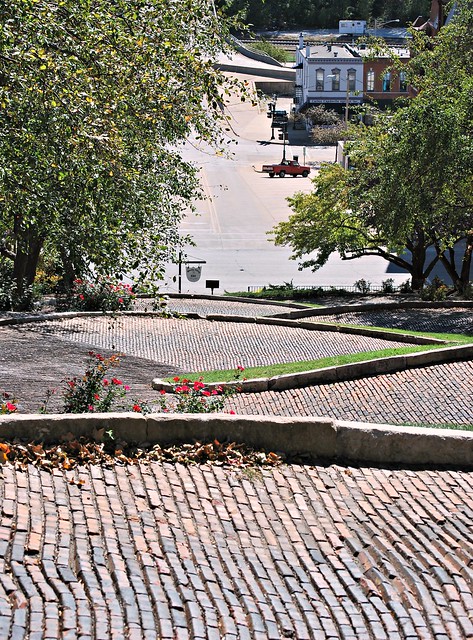
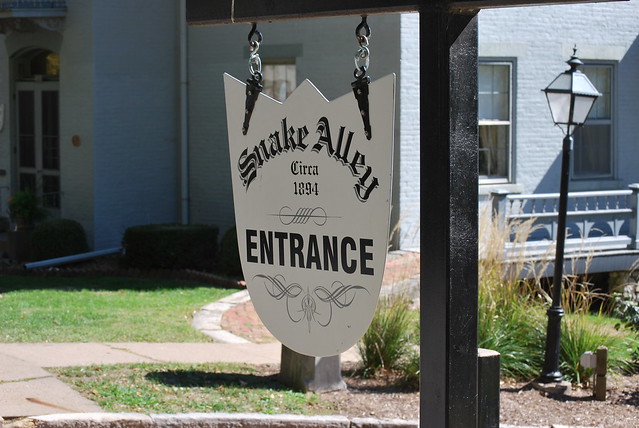
Ripley's Believe it, or Not touts Snake Alley in Burlington, Iowa as the crookedest street in the world. Judge for yourself. The alley on a hill is located between an old time residential area of the Port of Burlington and its business district. In 1894 a city crew designed and built the alley in an unique way. It consists of five half-curves and two quarter curves along the 275 stretch of brick pavement. The alley measures some 58 feet high and has a 21% grade in the one block stretch. While the street has been known to host a few cars down its winding trek most often bikers (both motor and foot powered) and pedestrians managed the crooked course. 


Snake Alley's pavement consists of bricks carefully placed. The lay of the brick is not totally decorative but was engineered to allow horses better footing as they made their way down the slope back in the day. Years of wear have produced black marks from turning tires. On this day a professional photographer used the alley as a backdrop for a high school senior's portraits. At other times the alley is used as part of a race course for bikes and foot. 

When you travel to Burlington, one of Iowa's oldest cities (which was the former second Wisconsin territorial capital, then Iowa territorial capital) make a stop at Snake Alley. You will enjoy the view and maybe make the claim that you tamed the crooked path of bricks.

Tuesday, April 17, 2012

Cooperative Venture Southbound Near Burlington, Iowa


Working life on the Mississippi River is often characterized by towboats and their cargo. Commerce on the river also includes excursions, fishing, channel maintenance and the like, plus hundreds of support industries positioned for the manufacture and delivery of goods and services.

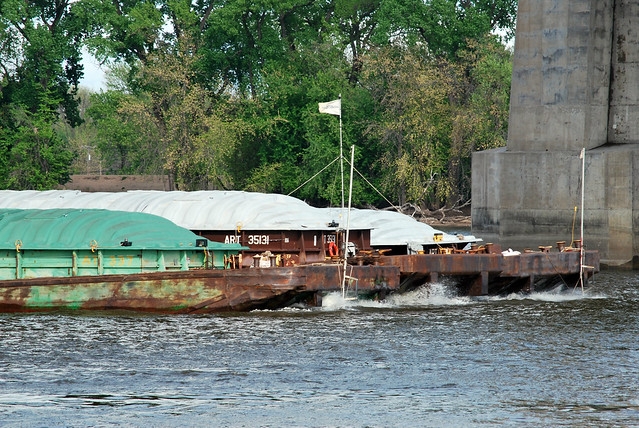
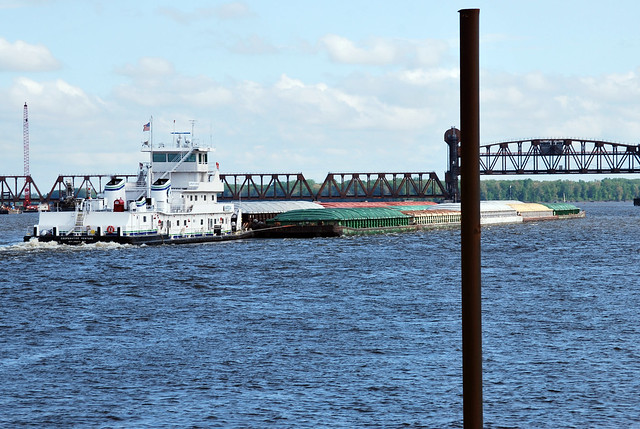
On this day the towboat, Cooperative Venture from St. Louis passed southbound pushing an array of barges under the Great River Bridge at Burlington, Iowa. Painted numbers on the bridge support indicate the distance from water level to the lower portion of the bridge to aid tows and other craft in negotiating the overpass. The barge configuration, three abreast, carries a flag designating the lead formation.


Upon close examination it appears that these 15 tied barges are empty as they ride high on the waterway. After passing the bridge the Cooperative Venture quickly changed orientation as to align with the next passage, an aerial lift bridge just a short distance away. Once again the river provides endless entertainment through its natural vistas and working commerce. And all of that just a few hours or less from the mighty 42N observation station. Know that.

Sunday, March 6, 2011

Burlington's Span Across the Mississippi River


Before Des Moines was the capital of Iowa there was Iowa City, which served as the second territorial capital and later the first state capital of Iowa. Before Iowa City there was Burlington which served as Iowa territory's first capital site in 1837. Part of the reason for the city's location is the Mississippi River. On this warm late winter day the river is free of ice, the barge traffic was seen moving empties upriver and a few bald eagles flew overhead.


Near the Port of Burlington building is a view of the Great River Bridge. The asymmetrical stayed bridge opened in April 1990 at a construction cost of $49 million. In the foreground is the Lady Liberty of Burlington statue which is very similar to the same statue (size, composition, color) located in Cedar Rapids. Both statues are connected to the efforts of the Boy Scouts. In 2008 flood waters reached the black line above the plaque on the base of the statue. Similarly in Cedar Rapids the flood of 2008 reached the statue's body. Coincidence? Know that.