Showing posts with label Moon. Show all posts

Sunday, June 21, 2020

Venus Visits the Pleiades


Our closest planetary neighbor, Venus, passed near the Pleiades, an open star cluster in early April 2020. This alignment was a stunning sight with the naked eye as well as with any magnification. Just this week Venus and our Moon aligned for another great show - if you had a cloudless view. A host of comets were also predicted to offer a sky show this year but two have fizzled as they rounded the sun. However, there is another promising ice ball (Comet NEOWISE (C/2020 F3) on its way and may be seen in the northern hemisphere during mid-July. We will see.

Wednesday, August 23, 2017

Eclipse over Fairmont, Nebraska


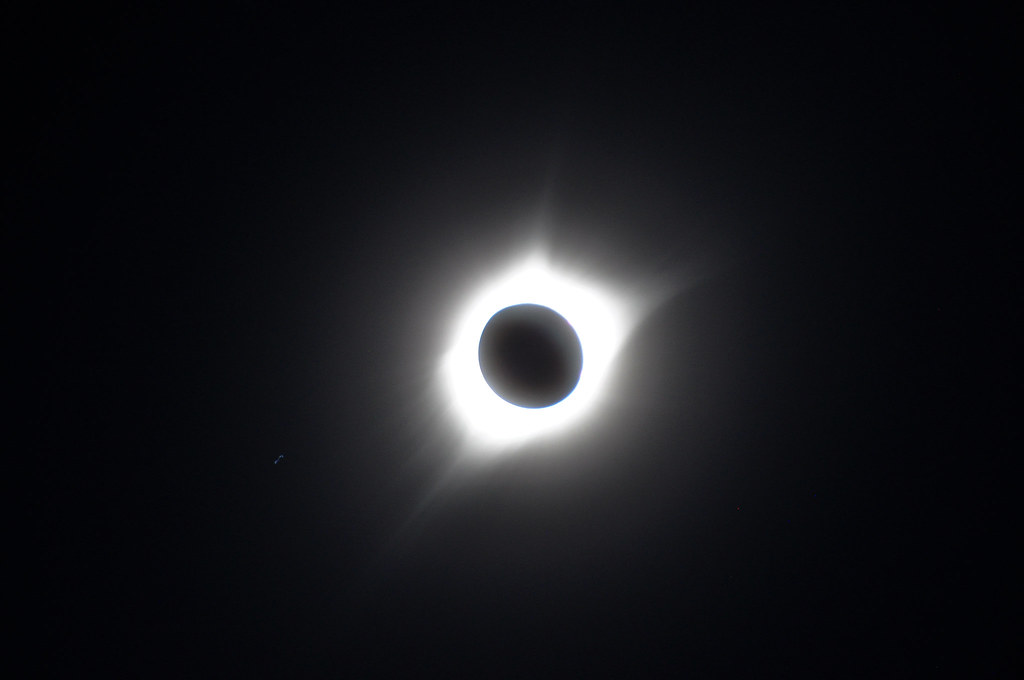
A total solar eclipse is something to behold. I have seen partial solar eclipses and thought highly of them, especially if the foreground had some interesting objects or the sun's surface had sunspots. This was my first visit to the zone of totality. It brought me to Fairmont, Nebraska where about 5,000 other eclipse enthusiasts gathered on Monday, August 21 to view the event.

The morning leading up to the eclipse was filled with clouds from a passing thunderstorm with periods of open blue skies. At totality the sky near the sun was mostly cloud free, which only accented the most wondrous sky event that I have witnessed.

Photos, films and video cannot do the totality event justice because of all the rapidly changing sky conditions, the crowd's reaction, and the grandeur of the what is being witnessed. To see the solar corona develop as the moon completely covers the sun is spectacularly unforgettable.

Do yourself a favor and make plans to see a total solar eclipse in person. For the US, that would be on April 8, 2024. I still have more photos of this event that I will post soon - more of what was happening with the crowds.

Tuesday, August 22, 2017

Fairmont Nebraska Welcomes Diamond Rings at Great American Total Solar Eclipse 2017

What a spectacular event! A total solar eclipse is something that everyone should experience. At a well planned, town hosted site in Fairmont, Nebraska some 5,000 people gathered from all over to see totality on August 21, 2017. I took several photos of eclipse enthusiasts and of course the two celestial orbs doing their dance, that I will post soon.

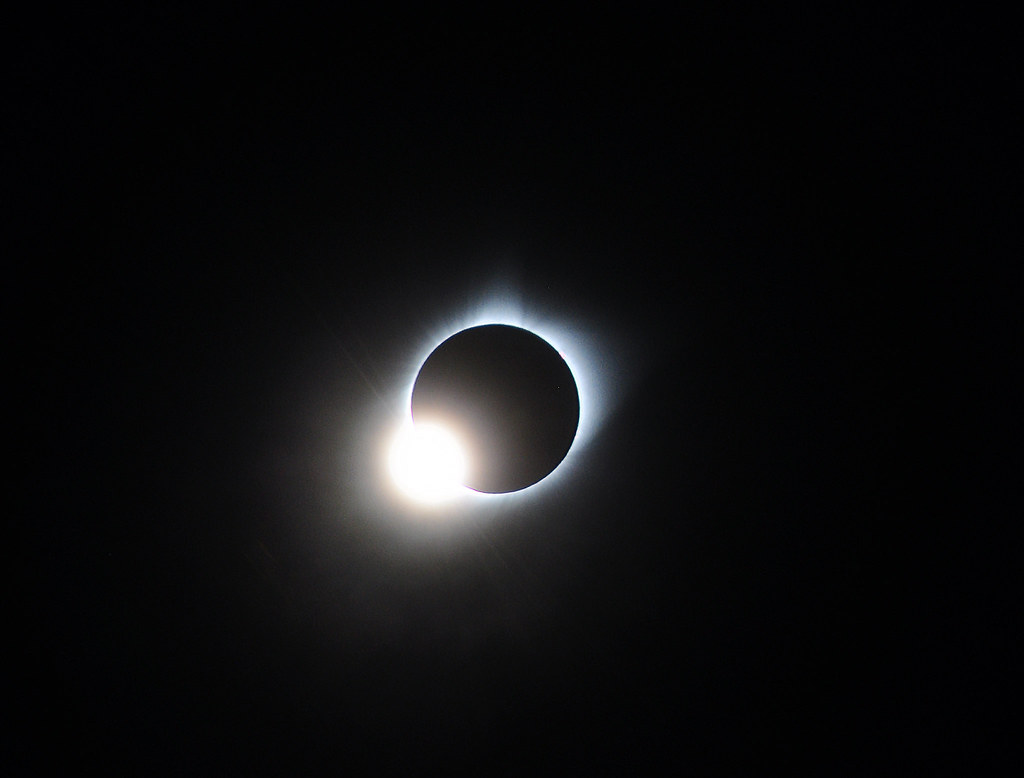
Here are the two best images of the diamond ring effect direct from Fairmont. The top photo occurred as the moon slowly passed in front of the sun leaving what is termed the diamond ring effect. It lasts only a few seconds but can be seen again as the moon pulls away from the solar disk about two and a half minutes later. 


Clouds had been around for most of the morning leading up to the total eclipse. Totality started out with little to no clouds but gained a few more wisps in just a few minutes. The bottom photo shows the exiting diamond ring effect with clouds acting as a frame. Look close and see the solar prominence, large, bright features extending outward from the Sun's surface at the noon to four o'clock position. 

One thing that I learned - even the best photos and videos cannot do justice to the totality experience. So many changes occur in the minutes or seconds before totality - like the rapid darkening of the earth's sky, the slight decrease in air temperature, the expansion of the solar corona and so forth. I'll get more photos posted as soon as I can.

Sunday, November 6, 2016

Moonrise on the Ohio River


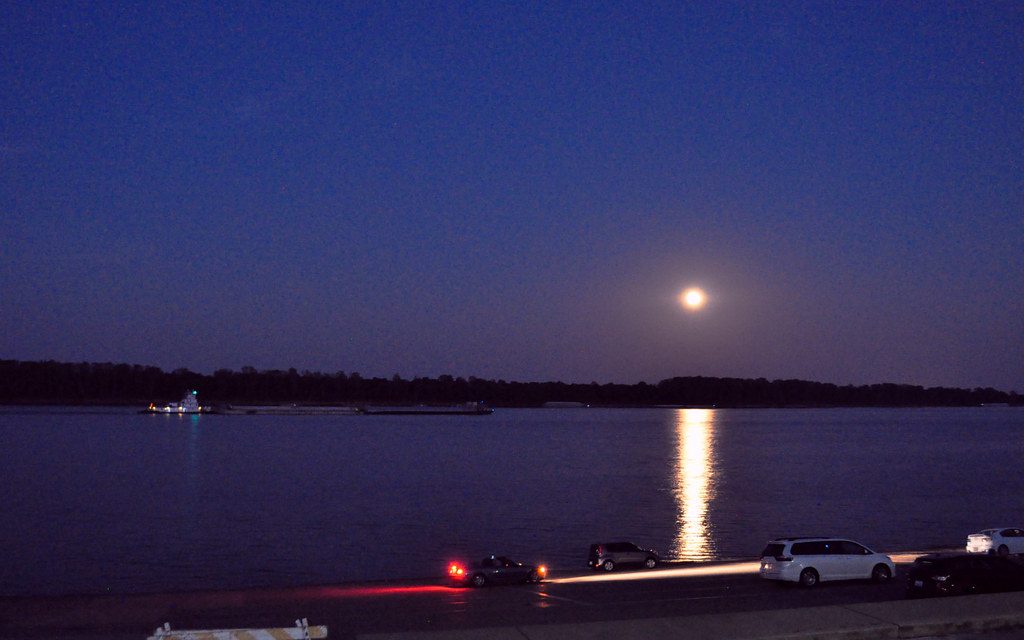
Last month's journey through the mid-South included a stop in Paducah, Kentucky. One evening was capped off with very warm temperatures, Oktemberfest, a zombie walk and this spectacular moonrise as seen beyond the floodwall on the Ohio River. I timed this photo to include a tow and barge moving east upriver. Paducah is an operational port for the Ingram Barge Company.


Thursday, October 23, 2014

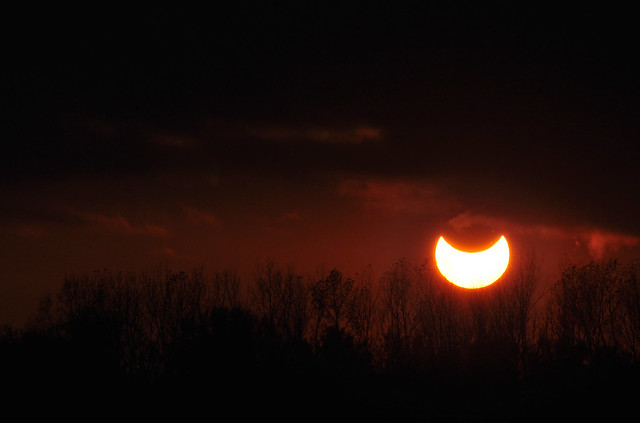
Partial Solar Eclipse Seen From Wickiup Hill


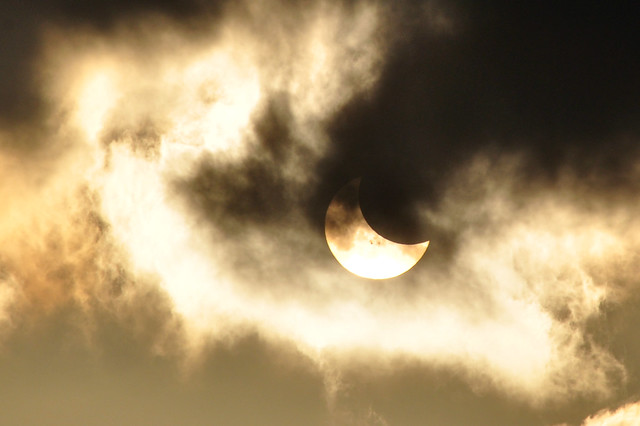
October 23, 2014 will be remembered for a spectacular late day solar eclipse around Cedar Rapids, Iowa. The first contact time (the time when the moon initially started its journey across the sun) of roughly 4:33 pm was completely obscured by a thick cloud deck. Later, about 5:15 pm the clouds began to part but did not totally disappear. Acting as a filter, the clouds allowed glimpses of the sun-moon-earth dance.
 

Look closely at the image of the sun. Those two dots near the solar disc center are actually solar sunspots, extremely large solar storms often larger than the earth. The cloud deck not only acted as a natural filter but also added a dramatic effect to these images.


Finally near 6:02 pm the sun neared the western horizon and shone through a thick atmosphere, turning visibly redder. These scenes were taken from the nature area called Wickiup Hill located north of Cedar Rapids, near the Cedar River.

Tuesday, August 12, 2014

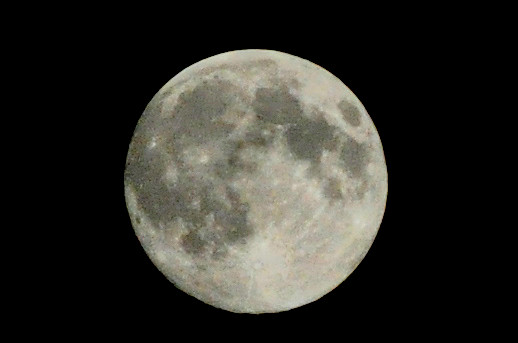
Supermoon - Crappy Focus


This was my best shot of terra luna last Saturday as it became Supermoon, skimming some 37,000 miles closer to us than normal. Despite the revealing dust and smudges on the telephoto lens I continue to not be able to find infinity focus, and that's trying both the manual and auto-zoom settings. If anyone has a tip to nail crisp focus of the moon and stars please let me know.

Saturday, March 16, 2013

No Comet Pan-Starrs Sightings in My Skies - Yet


The first visible comet of the 2013, Comet Pan-Starrs did not give up its dusk sky position at the 42N HQ on Wednesday, March 13th. While several northern latitude observers have already reported seeing and photographing the comet, the boiling ice ball has remained an elusive light smudge for me. So I concentrated on capturing a two or three day old moon instead.  

Compounding the frustration of not getting a visual lock on the comet, has been cloudy sky conditions at or near sunset. Current information about where to find the comet, its improving brightness, and possible fragmentation can be found here. I am poised to find Pan-Starrs on the next cloudless evening which could be this Sunday (St. Patrick's Day.) Good luck with your search.

Monday, December 17, 2012

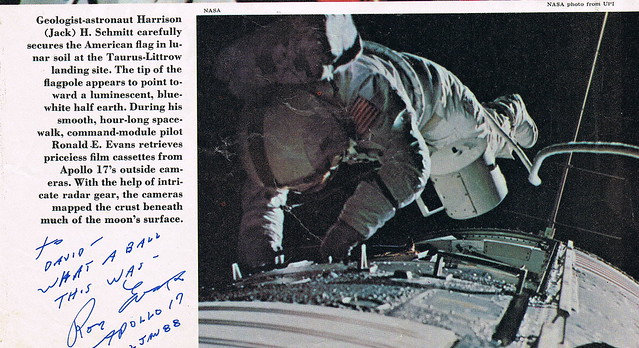
40 Years Ago - Apollo 17’s Ron Evans Took a Walk in Space


Forty years ago today, the last NASA manned mission to the Moon was on its way home. At that time, Command Module Pilot Ronald Evans made a one hour six minute space walk to retrieve film cassettes from Apollo 17’s exterior cameras. Those photos captured the crust beneath much of the lunar surface. In mission imagery this photo of Ron outside the service module bay was widely used. It also stands out as the furthest walk in deep space still on the books since no one has returned to the moon or ventured further since December 1972. Evans also holds the record for most time in lunar orbit.

Fifteen years later I wrote to Evans, than a retired astronaut busy with a variety of work. I asked him several questions that he answered and signed several magazine pages of the mission that I had sent him. Ron wrote this spacewalk was the highlight of the mission for him being near the moon’s vicinity on the return to earth. He told me on January 2, 1988 “what a ball this was” to walk in space. Ron Evans died of a heart attack on April 7, 1990.


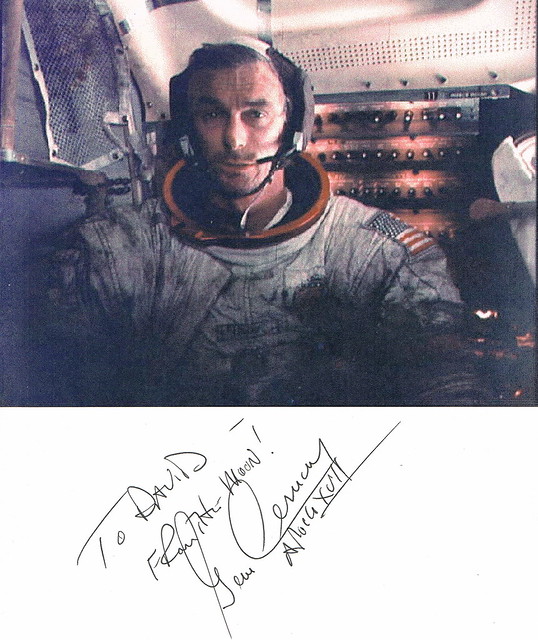
In 1996 I met Apollo 17 Commander Eugene Cernan when he came to town to help dedicate a portion of the National Czech and Slovak Museum & Library. He signed a photo that I had brought him of a very tired looking mission commander inside the lunar module on the moon’s surface after EVA-3.


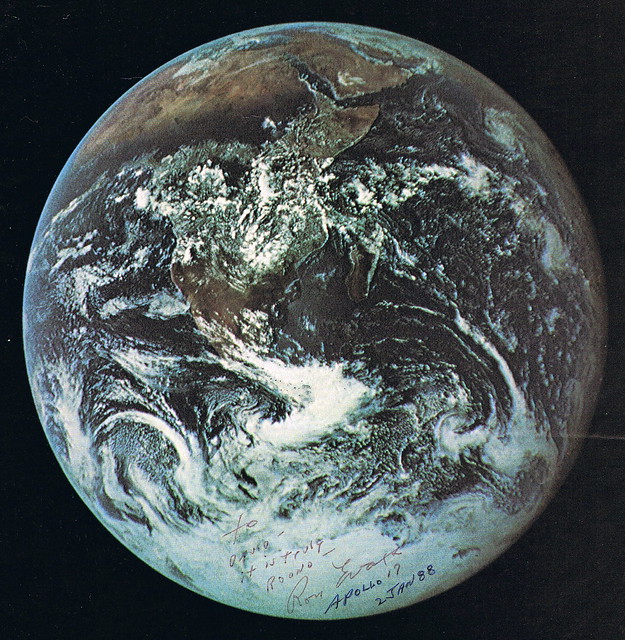
Apollo 17 also produced a very famous image of the full earth where the continents of Antarctica, Africa, Europe and parts of Asia can be seen. The photo was long used as the earth image from 1972 until perhaps a decade ago when more full earth images from satellites and interplanetary probes were released.

Evans said of the round earth image, “it is truly round.” He also shed some light on which crew member took that famous photo. He wrote me, “I took that one, but Jack (Schmitt) will also claim credit. Ha!”

Someday I will contact the third member of the Apollo 17 crew, Jack Schmitt and learn more firsthand about that mission and who took that famous photo.

Saturday, August 25, 2012

Neil Armstrong's Personal Impact


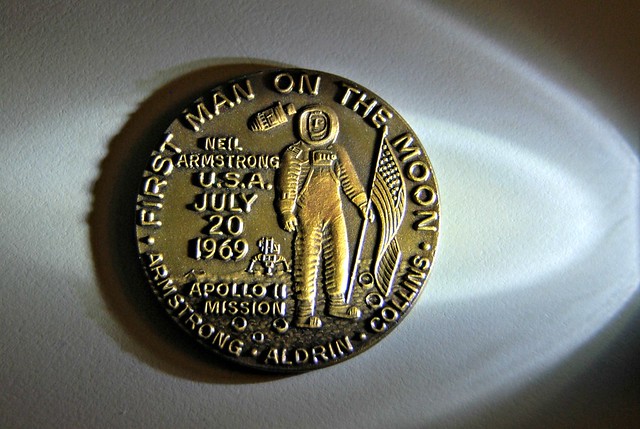
This afternoon I learned of the passing of Neil Armstrong. His last NASA mission was his finest - that of being the first to land and walk on the moon way back in July 1969. I like many millions of earth bound viewers watched the late evening EVA that took Armstrong and crewmate Buzz Aldrin onto the moon's surface. While the two astronauts bounced and strolled on the lunar surface the black and white television images beamed a new chapter of human achievement. This was a proud moment for the USA and the world.

Last night while arriving home after dinner and watching a concert in the park we pulled into the driveway in the dark. I had told our friends earlier that if the concert went longer we could see the International Space Station pass overhead. Not much interest was expressed. Then it appeared as if on command. The orbiting station some 230 miles above the earth traveled silently and as bright as magnitude 0.3 from west to east southeast before dimming to dark as it passed into earth's shadow.

The passion for space stuff still stirs my imagination. While I recall watching Gemini missions it was the Apollo moon missions that captured my attention. Neil Armstrong was a huge part of that imagination. He lived the dream.

Sunday, May 20, 2012

WOW - Annular Solar Eclipse Seen Near Alburnette, Iowa


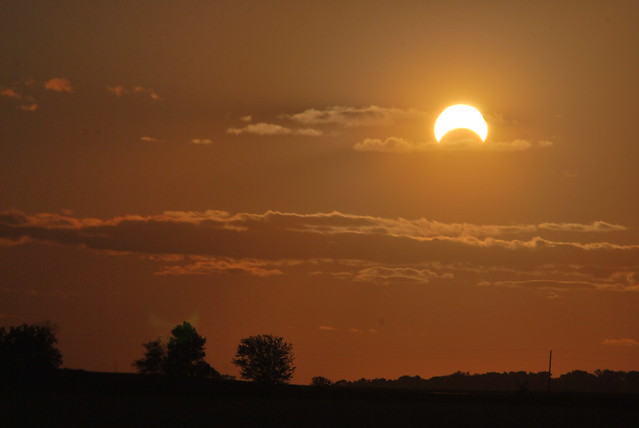
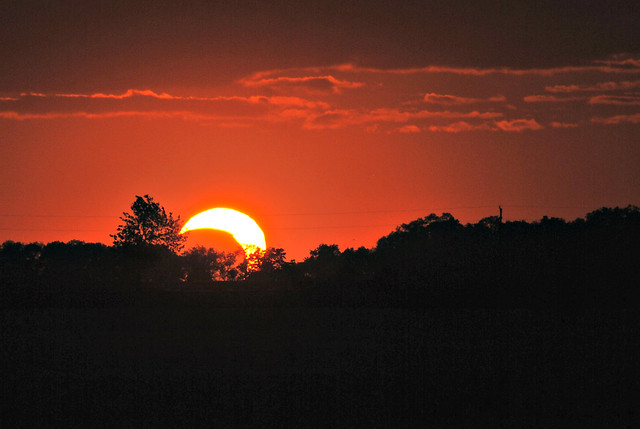
From 7:45 to 8:24 pm CDT today local sky conditions were optimum for viewing a celestial sight - an annular solar eclipse. Although watching the alignment at the beginning of the transit was quite bright, clouds and a thickening atmosphere made viewing better with each passing moment. The trick is to fine some interesting foreground structures, minimize lens flare and hope for timely passing thin clouds.


The sun and moon set before the transit completely passed. About 70 percent of the sun was blocked during this pass. Your next chance to see another transit of the sun is June 5 when Venus will move across the disk of old Sol. On August 21, 2017 a total eclipse of the sun will be visible in much of North America. Be there for these - and protect your eyes. Know that.

Saturday, July 9, 2011

Of Mice and the Moon


A waxing Moon rose this afternoon which coincided with my discovery of this article from the Clinton Morning Age, Clinton, Iowa, March 4, 1904:

"A curious Indian legend was told to some people in Omaha by a full blooded Sioux who lived at the Pine Ridge agency.

He said the belief was that every time a new moon appeared it was a signal for all the mice in the country to gather themselves together in one spot. When they assembled they then separated into four great armies. One army went to the north, another to the south, a third to the east and a fourth to the west. These armies of mice traveled until they reached the point where from the place of starting the heavens seemed to touch the earth. Then they climbed up the sky until they came to the moon, which, by this time was full.

All of the four armies then commenced nibbling Luna, and when they had eaten her all up the mice would scamper back down the heavens to the earth and wait for her to show herself again, when the journey and the nibbling would be repeated by the mice, and this is what the Indians of early days believed was the cause of the moon growing old and finally disappearing." Know that.

Wednesday, January 12, 2011

Lunar Smoke At First Quarter


Today the Moon reaches first quarter illumination as seen from these parts. Our nearest celestrial neighbor dodges fast moving smoke from the Heat Plant at Mt Vernon, Iowa's Cornell College. Full moon occurs next Wednesday, January 19th. Know that.

Thursday, May 13, 2010

Skylab's Shaky Start - 37 Years Ago

Unmanned Skylab 1 lifted off from Cape Kennedy, Florida 37 years ago on May 14, 1973. Within the first few minutes of launch the last Saturn V rocket configuration shook so much that the third stage laboratory (Skylab) began losing exterior components. Following the craft’s insertion into Earth orbit ground controllers discovered the loss of the micrometeor shield and one of two solar panels.

Without the shield and substantial loss of electrical generating capacity, Skylab began to heat up internally and posed a problem for the crew’s arrival in a few days. High temperatures inside the spacecraft, it was theorized could have produced poisonous toxins, and lead to loss of equipment and supplies.


Scientists, engineers, astronauts and management took ten days to study the problem, come up with a fix, and train the three man crew. The mission launch of astronauts Pete Conrad, Joe Kerwin and Paul Weitz took place on May 25th to repair the ailing station and begin a new chapter in extended earth orbit stay. Once in orbit the crew deployed a parasol to shade the lab’s exterior. The remaining stuck solar panel was dislodged by the crew after snipping a metal band that held the collapsed panel in place. Following the initial repair drama the crew stayed in orbit for 28 days setting endurance records.


Skylab’s launch was an exciting new chapter in the American space program following the close of the Apollo moon missions. After the last three-man crew vacated Skylab in early 1974 the US conducted the Apollo-Soyuz Test Project joint mission with the Soviets in 1975 utilizing the last remaining Saturn IB rocket.

Six years later NASA rolled out the Space Shuttle program to continue earth orbit exploration. The unmanned Skylab vehicle eventually fell out of orbit and was mostly destroyed during re-entry with some pieces surviving on July 11, 1979 - long enough to strike Australia. Years later Russia revealed that it had constructed its own space shuttle, the Buran to among other things capture the vacated Skylab and return it to the Soviet Union for analysis.

As the Space Shuttle program winds down there is much debate politically, economically and scientifically about the direction of American manned space exploration.

One thing is sure; Skylab’s contributions directly enhanced the International Space Station’s mission (along with the Soviet Mir program) and undoubtedly will lead to long range space exploration vehicles and living habitats – be it in earth orbit, the surface of the moon or one day on Mars. Know that.