Showing posts with label University of Iowa. Show all posts

Sunday, July 10, 2016

Feathery Tempation Eyes


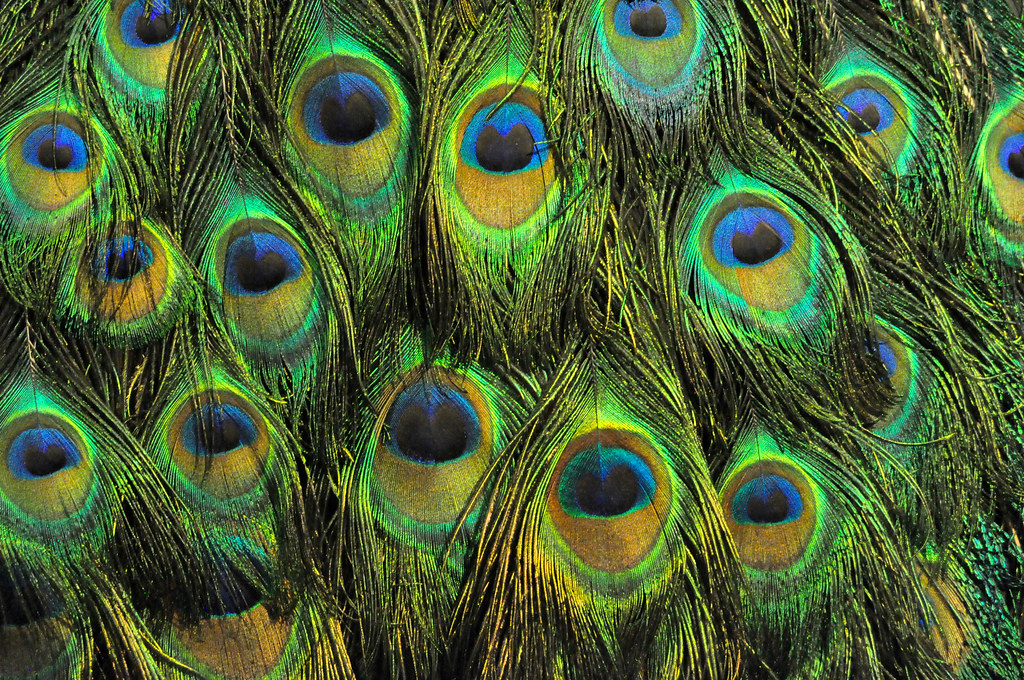
A peacock's vivid plumage is pure art. This particular display comes courtesy from the University of Iowa's Hall of Birds located at Macbride Hall, which is part of oldest existing university museums west of the Mississippi. Be sure to visit Bird Hall, Mammal Hall and the Natural History Museum all within that building. Many students are not aware of the museums let alone visit the displays.

Saturday, January 24, 2015

Nile Kinnick's Outlook


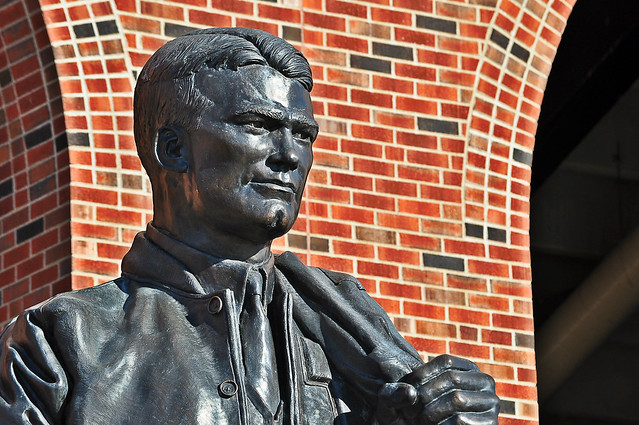
For an Iowan, one way to look forward to a great year is to draw inspiration from University of Iowa athlete and student Nile Kinnick. As many Iowans know Nile is the only Heisman trophy winner from the UI. Iowa Stadium, the location where he played football was renamed Kinnick Stadium in the 1970s and this bronze statue was created and dedicated to him in 2006.

While he died just a month short of his 25th birthday on a naval training mission in 1943, his legacy seems to grow each year as new Iowa football fans learn about his on and off field accomplishments. He was a grandson of an Iowa governor and many people feel that Nile's interest in politics and persuasiveness could have taken him to higher office. His words at the Heisman acceptance ceremony in 1939 are considered the most eloquent of any of the trophy's acceptance speeches. Read them here or watch here at the 6:39 mark.


"I thank you very, very much, Mr. Holcomb. It seems to me that everyone is letting his superlatives run away from him tonight. "Every football player in these United States dreams of winning this trophy. The fact that I am actually receiving it overwhelms me, and I feel what those who have received the Heisman award before me must have felt. "From my personal viewpoint, I consider this a tribute to the coaching staff at the University of Iowa, headed by Dr. Eddie Anderson, and to my teammates sitting back in Iowa City. A finer man and a better coach never hit these United States and a finer team never performed on any gridiron than the Iowa team of 1939. I wish they might all be with me tonight to receive this trophy. "I want to take this grand opportunity to thank the sports writers all over the country who saw fit, saw their way clear to cast their votes for me. I also want to thank Mr. Pierce and all those connected with the Downtown Athletic Club for making this trophy available to the football players of the nation. "And I would like, if I may, to make a comment which I think is appropriate at this time. "I thank God that I was born to the gridirons of the middle west and not to the battlefields of Europe. I can speak confidently and positively that the football players of this country would rather fight for the Heisman trophy than for the Croix de Guerre."

Monday, June 23, 2014

Symbols of the University of Iowa


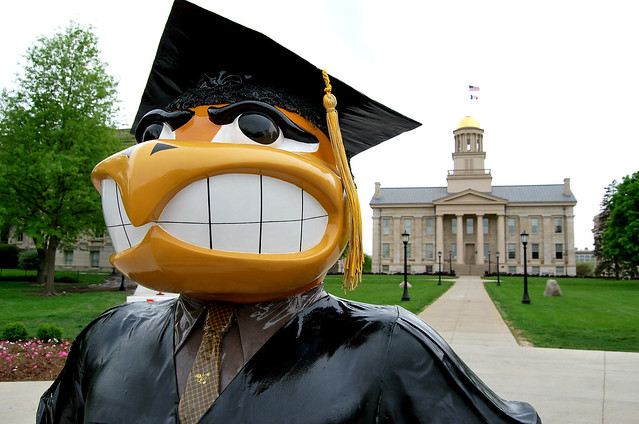
Look around Iowa City this spring and summer and discover lots of Herkies. This Herky the Hawk (athletic mascot) is decked as a graduate and occupies the main approach to the Pentacrest and Old Capitol, itself another strongly identified symbol of the university.


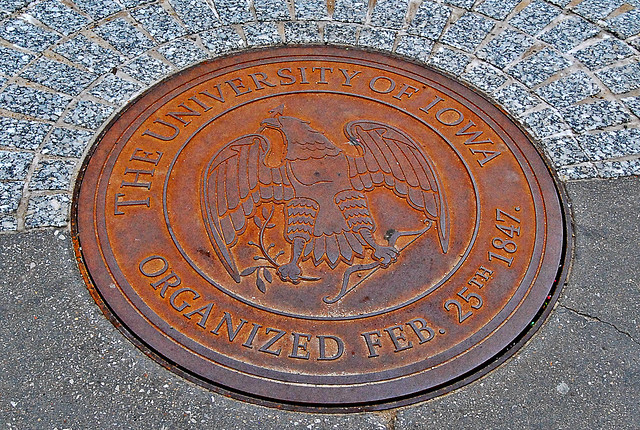
Directly in front of the statue is a metal representation of the seal of the university. While these icons can be found throughout the campus the tie-in to the school is strongest at this location on campus steps from downtown Iowa City.

Thursday, January 30, 2014

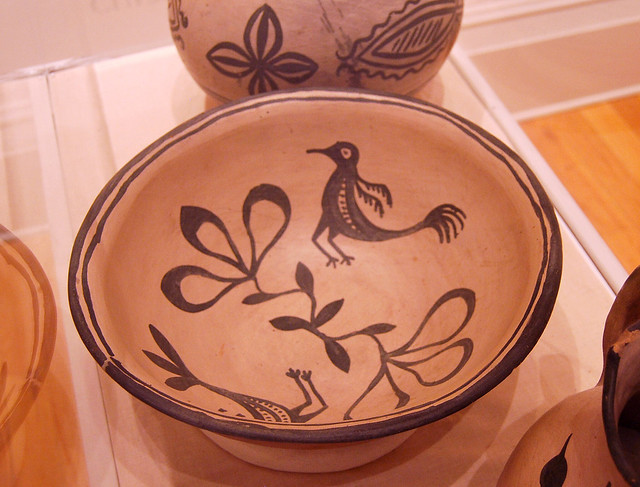
Puebloan Vessels at the University of Iowa


Simple. Elegant. Useful. This pottery exhibit closed a month ago. What you missed was an excellent collection of native pottery from the American Southwest. The pieces were on display at Old Capitol in Iowa City, Iowa. Curated by UI anthropology professor Margaret Beck, the exhibit focused on how communities used different types of vessels in everyday life. The featured pottery is from the ethnographic collections of the University of Iowa Museum of Natural History and Museum of Art.

Sunday, January 26, 2014

University of Iowa Old Capitol's Melted Bell Tolls for Thee


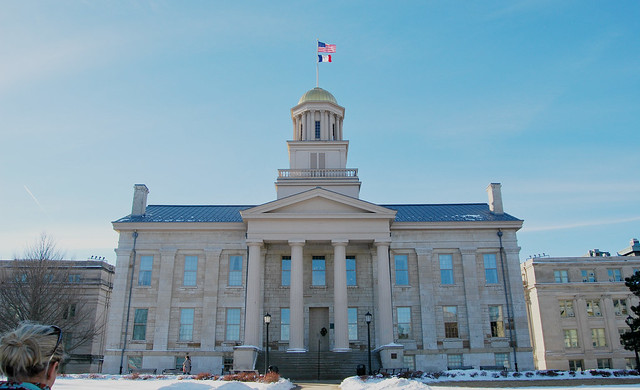
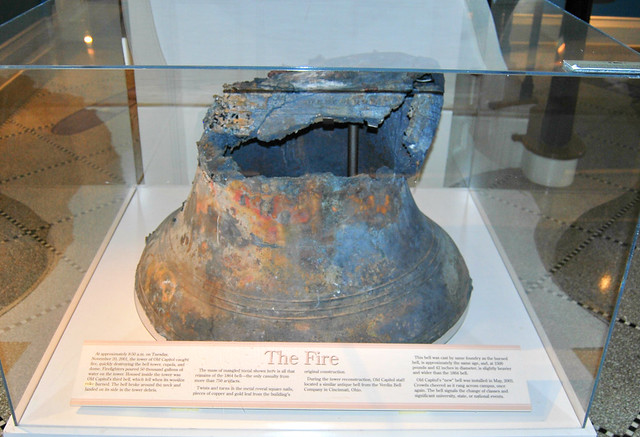
The centerpiece of the University of Iowa's campus is Old Capitol. It serves as the icon of the university. The building dates from the mid-1800s and was a territorial capitol of Iowa before that function moved to Des Moines. This is what the building looks like today. When it was being renovated in 2001 the cupola caught fire from a worker's paint remover torch. The structure from the roof line to the top of the dome was destroyed - including the bell. Inside the Old Capitol Museum (located in the building's basement) you can view the melted bell and read an account of the replacement.


The story of the melted bell reads as such: "At approximately 8:50 AM on Tuesday, November 20, 2001, the tower of Old Capitol caught fire, quickly destroying the bell tower and dome. Firefighters poured 50 thousand gallons of water on the tower. Housed inside the tower was Old Capitol's third bell, which fell when its wooden yoke burned. The bell broke around the neck and landed on its side in the tower debris. 

The mass of mangled metal shown here is all that remains of the 1864 bell - the only casualty from more than 750 artifacts. Twist and turns in the metal reveals square nails, pieces of copper and gold leaf from the building's original construction.

During the tower reconstruction, Old Capitol staff located a similar antique bell from the Verdin Bell Company in Cincinnati, Ohio.

This bell was cast by the same foundry as the burned bell, is approximately the same age, and, at 1500 pounds and 42 inches in diameter, is slightly wider and heavier than the 1864 bell.

Old Capitol's "new" bell was installed in May, 2003. Crowds cheered as it rang across campus, once again. The bell signals the change of classes and significant university, state, or national events." 

Saturday, January 25, 2014

West - East: An Old Capitol View


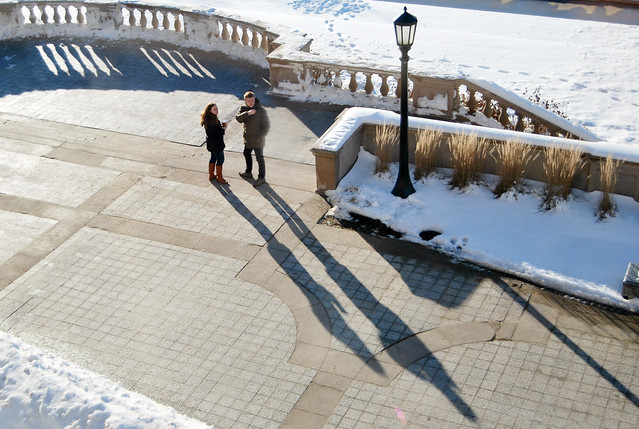
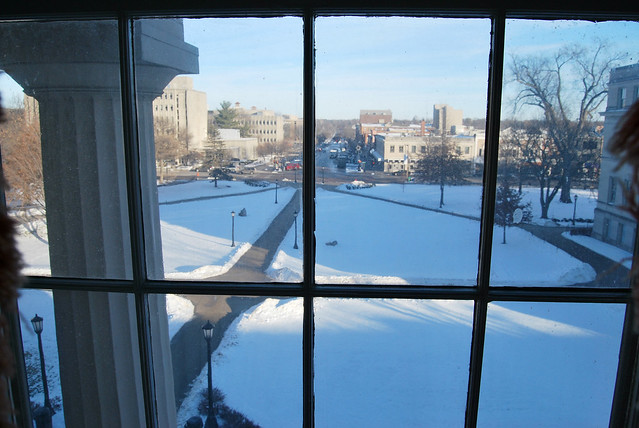
Old Capitol in Iowa City is the iconic landmark of the University of Iowa. Inside the first territorial capitol of Iowa are dramatic views of the campus and city. On this day the clear weather and late afternoon lighting afforded long shadows across the university's central campus. Out the second floor windows to the west was a sight of a couple in conversation, unaware that their shadow cast a length of nearly three times their actual size.


On the opposite side of the second story was this scene of the campus open area and the intersection of Clinton Street and Iowa Avenue. It's wintertime in Iowa. It's cold. And unless you can see the sun it is best to find somewhere where the temperature is warm. Only 55 days until spring!

Friday, January 17, 2014

Mooses in a Glass Box


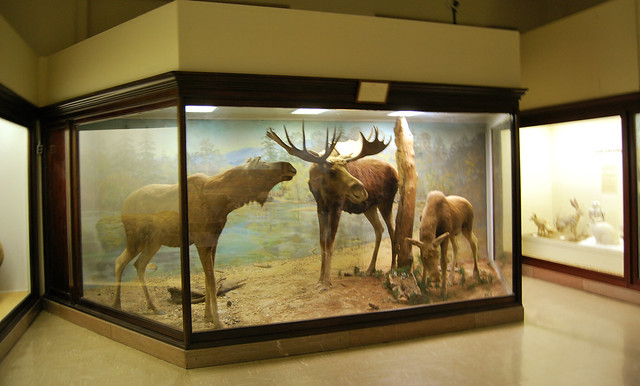
Every year there seems to be a sighting of a black bear or moose wondering around eastern Iowa. Iowa's DNR says the large animals are most likely from Minnesota, where they have treked along river, timber and corn fields in search of who knows what down here along the 42N latitude. While the latest sighting of a lone male moose was within the city limits of Cedar Rapids last month, the whereabouts of the northern creature is unknown. Here at the University of Iowa's Natural History Museum, Mammal Hall you can find a whole family of mooses. The display has been here for many years - and so have I.

Thursday, January 16, 2014

Treasure of Iowa


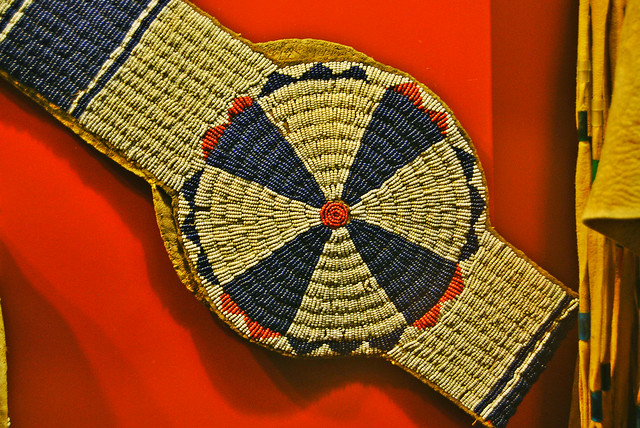
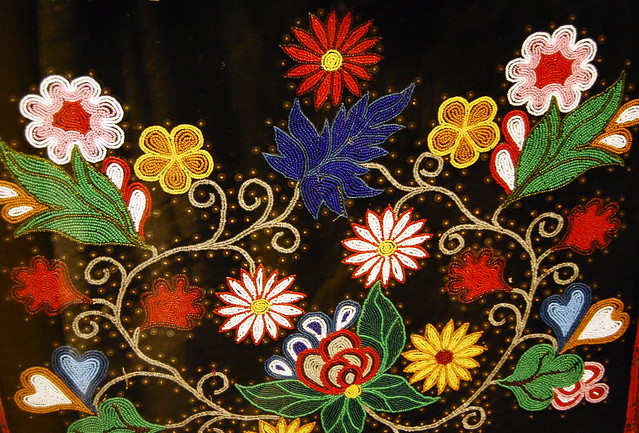
American native bead work, specifically Iowan is rare, detailed and a work of art. Check it out for yourself at the Iowa Natural History Museum at Macbride Hall in Iowa City, Iowa. Imagine how these are made. How do the makers get the beads? How is the pattern crafted? How long does it take to make this? Maybe someone knows.

Sunday, January 6, 2013

Whale Bones in Iowa


Yes, Iowa was once covered by a shallow marine sea. Today the result of that long ago sea are layers of limestone found just under the prairie soil. Some of the rock contain fossils of small marine creatures like coral, snails, fish and a few larger marine creatures.

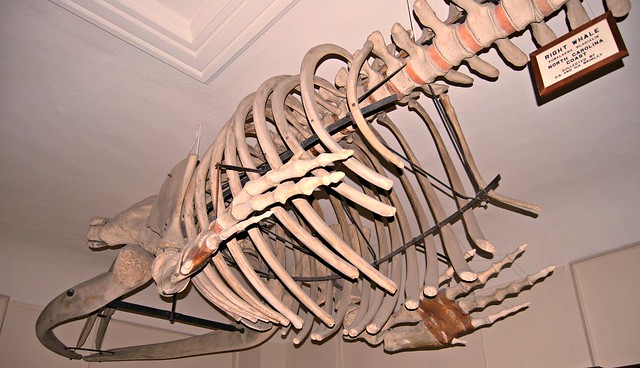
To see these suspended whale bones you need to visit the Natural History Museum at Macbride Hall on the University of Iowa's main campus. A Right Whale's skeleton was collected early last century on a North Carolina shore and brought to the university for study and eventual display. Many a schoolchild and adult has marveled at this creature's size and bone makeup. The whale is located in the  museum's mammal hall section. The other side of the building contains bird hall and is filled with all types of feathered creatures including a detailed observation post of a remote Pacific island sanctuary visited by UI researchers a hundred years ago. The lower middle portion of the building houses the third section of the museum and features a walk through Iowa's pre-history.  Come check it out. Admission is always free.

Wednesday, July 11, 2012

Early Iowan was Clovis Hunter


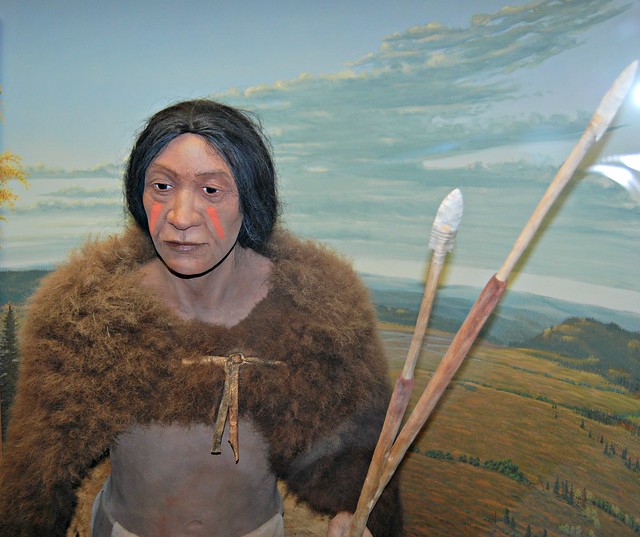
A visit to a local museum brings you face to face with a replica of early hunters in Iowa. What has been found over the years are Clovis points. These chiseled stone tools, named for a site in New Mexico have been found all over North America including Iowa. The distinctive white stone is called Burlington chert. Clovis points found in Iowa are estimated to be from the era 10,000 to 9,000 years BC. They represent the earliest known occupiers of Iowa and coincide with the retreat of the last glacier event through these parts. The exhibit can be seen along with other points of interest at the Museum of Natural History, MacBride Hall, University of Iowa in Iowa City, Iowa.

Monday, December 26, 2011

Iowa Native Beadwork Vest


Museums showcase many things. In between the pottery, spear points and ceremonial pipes crafted by Iowa natives (Chippewa, Mesquakie and Ioway) is this portion of a vest. It is displayed at the University of Iowa's MacBride Hall Museum of Natural History among the shoes and other outer wear.

This section of the museum is easily overlooked by students because it does not compare to the replica giant sloth (named Rusty) or display of geologic fossils. However the vest is worthy of the same scrutiny of any piece of art. Look at the design and work effort required to assemble the vest. Rusty might be able to draw the crowds of kids, but the museum's diverse display of early Iowa culture will keep them coming back for decades. Know that.

Friday, December 16, 2011

Observations on Stephen Bloom's Essay


Grain elevators near the Union Pacific rail lines at Norway, Iowa. 

This week Stephen G. Bloom, a journalism professor at the University of Iowa published an essay in The Atlantic about his 20 years of living in Iowa. (Read his work here.) His essay is a raw look at the Hawkeye state as it nears the first in the nation presidential caucus season in a few weeks.

Many readers who live in the 42N tall corn state reacted predicatively with outrage. Outside of his right to publish his observations and being critical of his employer (the State of Iowa) there are other issues of balance and context that the author chose not to address.

Bloom, a transplant from New Jersey via San Francisco who landed in Iowa City, enjoys a tenured position at a state university. His essay in a popular culture online magazine is based on a negative image of Iowa and its residents. Are some things true in his observations? Yes. The state's small and aging population coupled with a rural heritage makes easy pickings for dissecting Iowa's current culture as compared to metropolitan living. In his article Iowa's attributes become the basis for why the 29th state to join the Union is allowed to play an important role in the selection of presidential candidates.

What's the difference between this Iowa hit piece from others? Simple, the timing in the publication is directed squarely at the caucus season. Every four years discussion about how this process is structured is vetted. This time it included slashes upon middle America. Secondly, the attitude of the writer is one of projected large city know it all versus the perceived agrian salt of the upper Midwest.

It would be easy to describe New Jersey or San Francisco in terms of deviancy, aloofness, counter culture and other criteria using Bloom's template. But that is not what Iowans or constructive writers do.

Look, each state or region of the country has good and bad issues with all sorts of things like the weather, employment, population, immigration, economy, quality of living, education, etc. But look around. We collectively have the best of many worlds right here in the USA. Sure Iowa is agriculturally based. We provide some of the best corn, soy beans, and livestock to feed the world. And our technology helps many non-farm businesses also from avionics to telecommunications to medical advancements. 

Iowa has much more to offer, just like all other states. So what if our mid-continent, land locked state population isn't considered hip or cutting edge. Aren't we all in this together?

Iowans can take the criticism. Iowans can strive to fix what is broke. And, Iowans can highlight the positive qualities of living in such a great country.

For many, Professor Bloom's thought piece is a call to defend our freedoms and way of life between the Mississippi and Missouri rivers. Can we be better? Sure, that idea is what always made America strong.

Iowa's state motto is, "Our Liberties We Prize and Our Rights We Will Maintain." It is a concept relevant to Iowans and to all Americans. In under three weeks we will exercise our Liberty and select qualified candidates for the highest office in the government. Know that.

Sunday, May 15, 2011

Another School Year Passes at the University of Iowa


Friday was the last day of the 2010-2011 school year at the University of Iowa in Iowa City. A day earlier students pass Old Capitol on their way to study for and take finals during two days of summer-like weather. School resumes in three months - just in time for football season - now that is a coincidence. Know that.

Sunday, February 6, 2011

Centennial Celebration of Ronald W. Reagan


A few years ago in a box of miscellaneous stuff purchased from an auction in Independence, Iowa there was an envelope containing an advertising agency's artwork for the city of Dixon, Illinois - a boyhood home of Ronald Reagan. In the material were Polaroid test photos (to determine exposure and aperture) used to copy original artwork for some project. This was a common practice before today's digital composition and publishing techniques.

In this collection was an instant photo of an illustration of Ronald Reagan, the 40th President of the United States drawn by P. Wingart (or Wingert.) On today's occasion of President Reagan's 100th birthday it is time to share the artist's work.

Many people around 42N country know that Reagan got his entertainment start on Davenport's WOC radio and later on Des Moines' WHO radio as an announcer. One of his first assignments at WOC in the early 1930s was to cover a University of Iowa football game in Iowa City by doing color commentary. Having played the game as a student at Illinois' Eureka College, Reagan knew what the players were experiencing and called it as such. WOC program director Pete MacArthur was so impressed by the way Reagan handled the description of game that he told the play-by-play announcer to "let the kid finish the game" during the third quarter of that Iowa game. Reagan completed the play-by-play for that broadcast and three more Iowa games as a sports announcer. In his the own words, "the kid was overjoyed." Happy birthday Ronald Reagan. Know that.

Thursday, October 7, 2010

Iowa City's Old Capitol in Hawkeye Fall Splender


The University of Iowa began in the former territorial capitol building in Iowa City. At this time of year the Pentacrest is nearly in full color against a bright blue sky and temperatures in the 70s.


Directly across the street from Old Cap is Iowa Book and Supply. Inside its doors is everything Hawkeye for purchase. Here is a selection of shirts.


Need a Hawkeye key fob or decal or clock or cup or set of coasters? This is the place for all things black and gold.


And for only $199 each, you may purchase a real Hawkeye football helmet (replica) from today's design back through the years. On this display are the 1960-70s left, the mid to late 1970s center, and the 1979 to Present design inspired by Coach Hayden Fry. The other three sides of this column are filled with earlier helmet designs.


Four or five doors down from Book and Supply is The Airliner. Its been the 'liner since 1944, serving many a college student with a variety of great food and adult beverages. One tradition that seems to still be alive is for people to sit at chairs near the bar's front windows and rate those who walk by. Take that as you may, guys hold up fingers indicating how they rate side walkers - from one to ten. This generally takes the form of male judges who consume beer while rating female students walking by the place. Some things never change. Know that.

Friday, January 8, 2010

Nile Kinnick and the 1939 University of Iowa Football


Nile Kinnick and the 1939 Hawkeyes are remembered for a number of University of Iowa football accomplishments. That year the Hawkeyes finished at the No. 9 spot in the final AP rankings. During the 1939 season Nile Kinnick was associated with 107 of the 130 points Iowa scored, played 402 out of 420 possible minutes and set 14 school records.

Kinnick's awards from the 1939 season included being named a consensus first team All-American, the Big Ten MVP, the Walter Camp Award winner, the Maxwell Award winner, AP Male Athlete of the Year, and the Heisman Trophy winner - the school's only Heisman winner to date. The 1939 Heisman Trophy is currently on display at the University of Iowa Athletics Hall of Fame.

Besides the larger than life statue of student Nile Kinnick dedicated in 2006 at the stadium bearing his name, is this team autographed football. The 1939 Hawkeyes penned their names on the ball (double click on the photo to see a larger version) which is on display at the University of Iowa Football offices just a block to the northwest of Kinnick stadium. Know that.